
Higashiyama in Kyoto
 1K+ Views
 100+ Likes
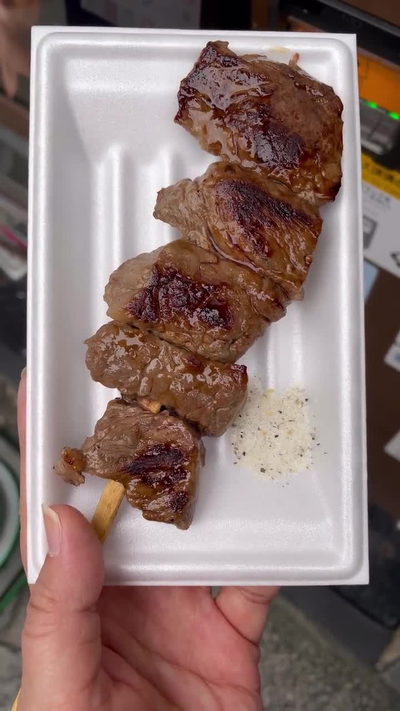
A close-up shot of a grilled beef skewer on a white styrofoam plate is shown at the beginning, with visible grill marks and a glossy sheen, accompanied by a small pile of salt. The scene transitions to a person in a black long-sleeved shirt and white gloves cooking the beef on a flat-top grill covered with aluminum foil. The person uses tongs to flip the meat, and other food items are visible on the grill. The video captures the preparation and presentation of a high-quality grilled beef skewer, emphasizing the cooking process and visual appeal of the dish.
 1K+ Views100+ Likes
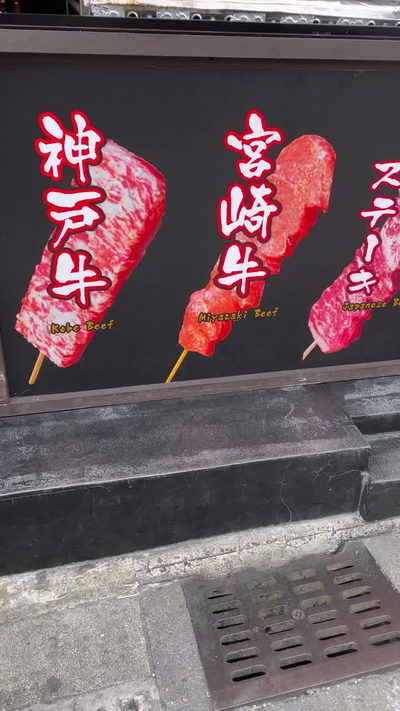
The video is a brief, static presentation of Japanese grilled meat dishes displayed on two posters. At 0:00, a red poster appears showing high-quality images of various grilled meats—beef and pork—alongside their prices in Japanese yen. The camera remains fixed, allowing viewers to examine the detailed visuals. At 0:03, the scene transitions to a black poster with similar skewered grilled meat images, again displaying prices in yen. The entire video lasts six seconds, with no movement, narration, or contextual cues beyond the food and pricing. The content is purely visual and informational, focusing on the appearance and cost of the dishes without any indication of a physical location, service, or visitor experience.
 1K+ Views100+ Likes
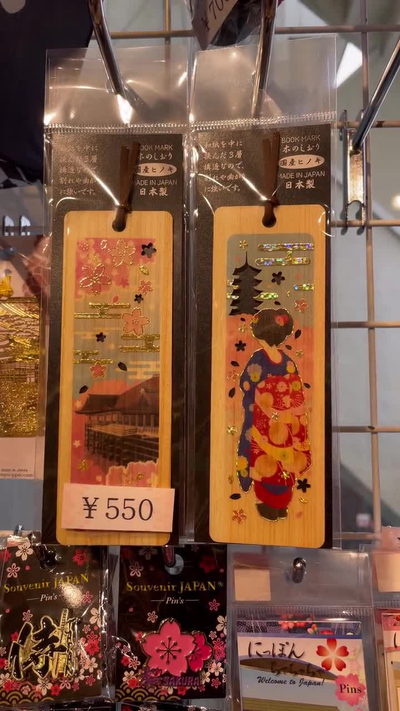
The video opens with a brief spoken message, '다음 영상에서 만나요.' (See you in the next video), followed by a visual showcase of Japanese-themed souvenirs. The camera pans across a collection of items including two decorative bookmarks featuring traditional Japanese motifs—such as a temple and a woman in a kimono—each priced at ¥550. The scene then shifts to a display of postcards depicting whimsical Japanese characters in settings like tea houses and traditional gardens, each priced at ¥300. The presentation is static, with no human interaction, movement, or contextual cues beyond the products themselves. The video is shot in landscape orientation, with a clean but unremarkable framing and no dynamic editing or narrative progression. There is no visible signage, venue, or indication of a physical store location, and the content feels like a product display or stock footage rather than a real-world experience or visitable place.
1K+ Views100+ LikesA close-up shot of a grilled beef skewer on a white styrofoam plate is shown at the beginning, with visible grill marks and a glossy sheen, accompanied by a small pile of salt. The scene transitions to a person in a black long-sleeved shirt and white gloves cooking the beef on a flat-top grill covered with aluminum foil. The person uses tongs to flip the meat, and other food items are visible on the grill. The video captures the preparation and presentation of a high-quality grilled beef skewer, emphasizing the cooking process and visual appeal of the dish.
1K+ Views100+ LikesThe video is a brief, static presentation of Japanese grilled meat dishes displayed on two posters. At 0:00, a red poster appears showing high-quality images of various grilled meats—beef and pork—alongside their prices in Japanese yen. The camera remains fixed, allowing viewers to examine the detailed visuals. At 0:03, the scene transitions to a black poster with similar skewered grilled meat images, again displaying prices in yen. The entire video lasts six seconds, with no movement, narration, or contextual cues beyond the food and pricing. The content is purely visual and informational, focusing on the appearance and cost of the dishes without any indication of a physical location, service, or visitor experience.
1K+ Views100+ LikesThe video opens with a brief spoken message, '다음 영상에서 만나요.' (See you in the next video), followed by a visual showcase of Japanese-themed souvenirs. The camera pans across a collection of items including two decorative bookmarks featuring traditional Japanese motifs—such as a temple and a woman in a kimono—each priced at ¥550. The scene then shifts to a display of postcards depicting whimsical Japanese characters in settings like tea houses and traditional gardens, each priced at ¥300. The presentation is static, with no human interaction, movement, or contextual cues beyond the products themselves. The video is shot in landscape orientation, with a clean but unremarkable framing and no dynamic editing or narrative progression. There is no visible signage, venue, or indication of a physical store location, and the content feels like a product display or stock footage rather than a real-world experience or visitable place.

Happening Now in Kyoto, JP
 1K+ Views280 Likes

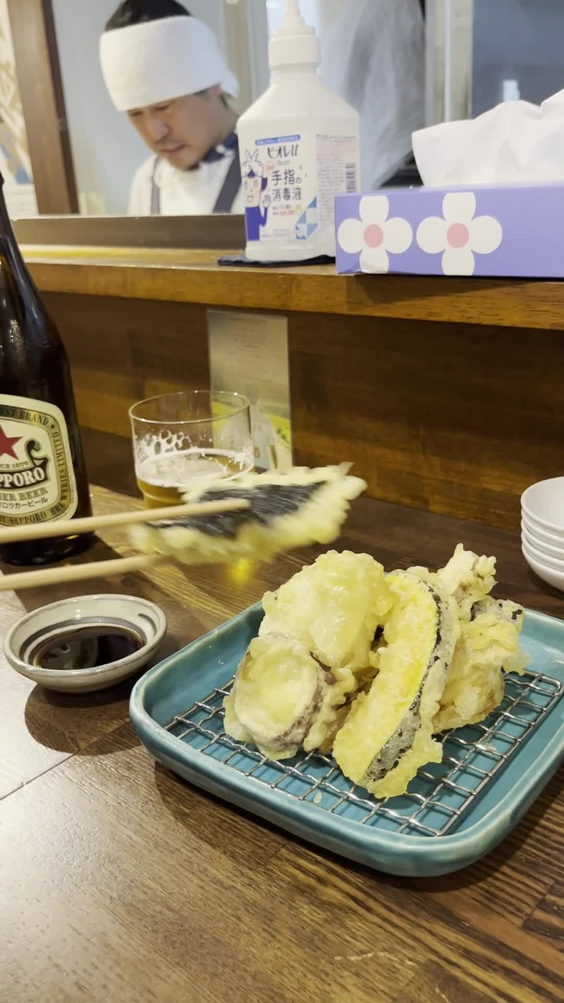
The video showcases a Japanese restaurant setting, featuring a table with various dishes such as okonomiyaki, tempura, udon noodles, soy sauce, wasabi, pickled ginger, beer, sake, and chopsticks. The camera pans across the table and then moves towards the kitchen area where chefs are preparing food. A man is seen holding a piece of tempura and smiling at the camera before taking a bite.
 1K+ Views100+ Likes
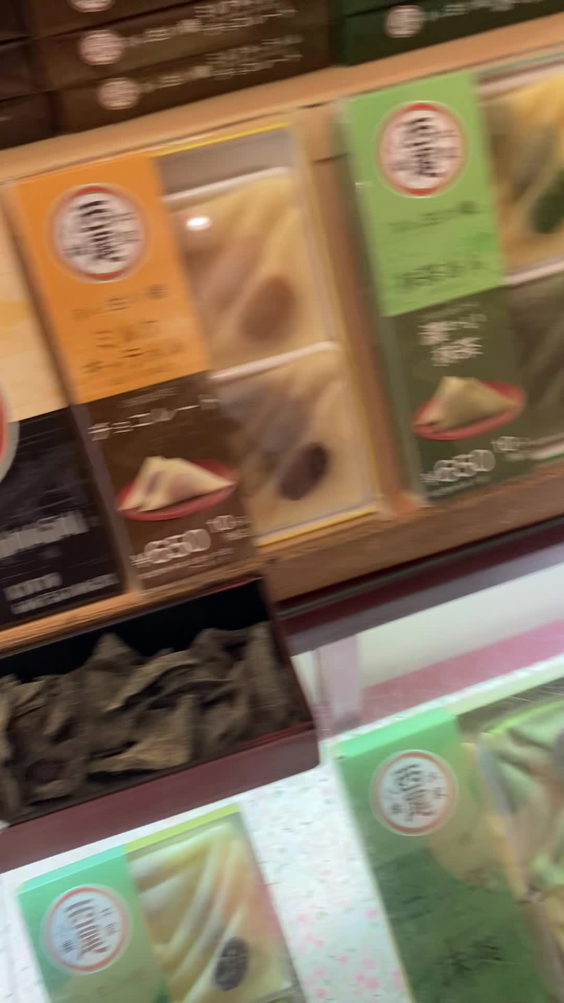
The video showcases various packaged Japanese sweets displayed in a glass case at a store. The camera pans across the display, revealing different types of sweets and their packaging.
 1K+ Views100+ Likes
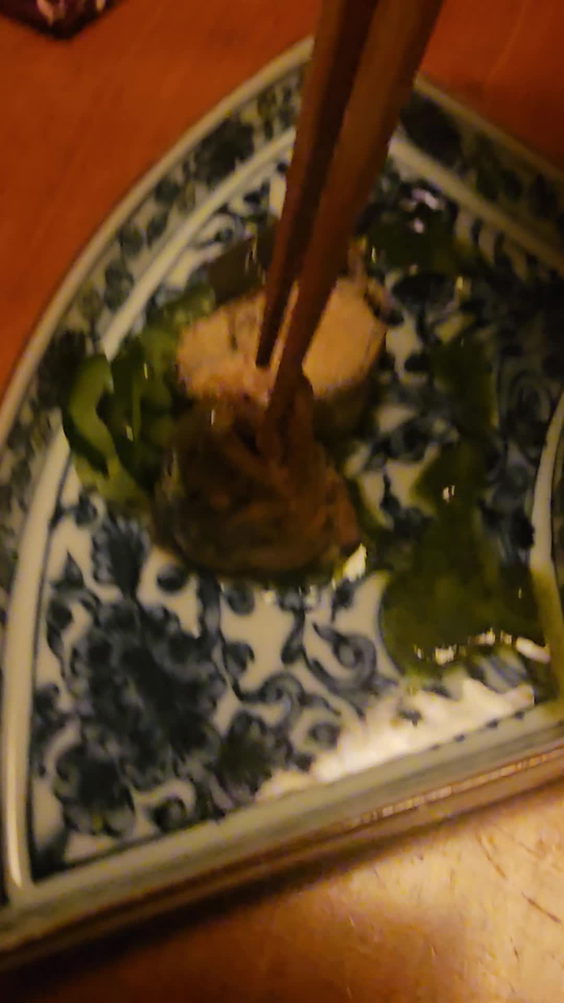
The video showcases a close-up of a plate with two pieces of sushi. Chopsticks are used to lift and reposition the sushi, highlighting the texture and presentation of the dish.
