
Da In restaurant in Singapore
 1K+ Views
 100+ Likes
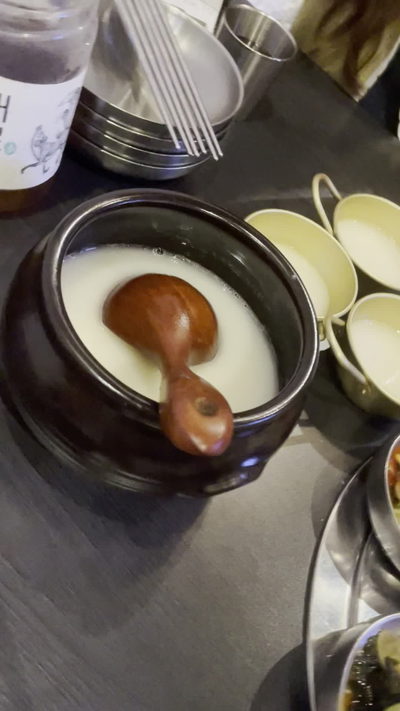
The video captures a traditional Korean meal setup, beginning with a close-up of a large bowl of rice porridge placed at the center of a wooden table, accompanied by a wooden spoon. The camera slowly pans across the table, revealing an array of small side dishes arranged symmetrically around the porridge. These include vibrant kimchi, seasoned vegetables, pickled radishes, and other fermented or marinated items typical of Korean cuisine. The composition emphasizes the cultural authenticity and visual appeal of the meal, with clean lines, natural lighting, and a minimalist backdrop that highlights the food. The only spoken line is a brief 'thank you' at the start, suggesting a moment of gratitude or acknowledgment, possibly from a host or chef. The entire sequence is static and observational, with no human presence beyond the implied act of preparing or serving the meal. The video ends as it began, with the porridge bowl in focus, creating a meditative, ritualistic tone.
 1K+ Views100+ Likes
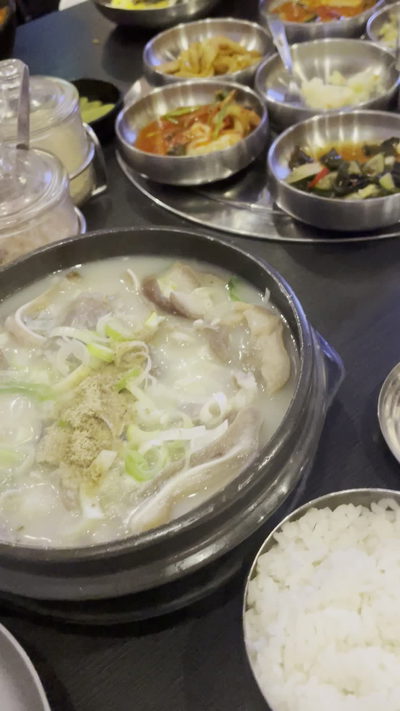
The video presents a close-up shot of a traditional Korean meal centered around a steaming bowl of soup, accompanied by an array of side dishes including kimchi, pickled vegetables, and other small plates typical of Korean cuisine. The scene is static, with no movement or people visible, and the focus remains entirely on the food. A brief spoken line at the beginning, '무선가 없어요 못했죠' (translated as 'There was no wireless, so I couldn't do it'), suggests a context of frustration or limitation, possibly related to a failed attempt to record or share the meal, though this is not visually supported. The video appears to be a still or minimal-motion shot of a meal, likely intended to highlight the visual appeal of Korean food.
1K+ Views100+ LikesThe video captures a traditional Korean meal setup, beginning with a close-up of a large bowl of rice porridge placed at the center of a wooden table, accompanied by a wooden spoon. The camera slowly pans across the table, revealing an array of small side dishes arranged symmetrically around the porridge. These include vibrant kimchi, seasoned vegetables, pickled radishes, and other fermented or marinated items typical of Korean cuisine. The composition emphasizes the cultural authenticity and visual appeal of the meal, with clean lines, natural lighting, and a minimalist backdrop that highlights the food. The only spoken line is a brief 'thank you' at the start, suggesting a moment of gratitude or acknowledgment, possibly from a host or chef. The entire sequence is static and observational, with no human presence beyond the implied act of preparing or serving the meal. The video ends as it began, with the porridge bowl in focus, creating a meditative, ritualistic tone.
1K+ Views100+ LikesThe video presents a close-up shot of a traditional Korean meal centered around a steaming bowl of soup, accompanied by an array of side dishes including kimchi, pickled vegetables, and other small plates typical of Korean cuisine. The scene is static, with no movement or people visible, and the focus remains entirely on the food. A brief spoken line at the beginning, '무선가 없어요 못했죠' (translated as 'There was no wireless, so I couldn't do it'), suggests a context of frustration or limitation, possibly related to a failed attempt to record or share the meal, though this is not visually supported. The video appears to be a still or minimal-motion shot of a meal, likely intended to highlight the visual appeal of Korean food.

Happening Now in Singapore, SG
 2.7K Views1.3K Likes

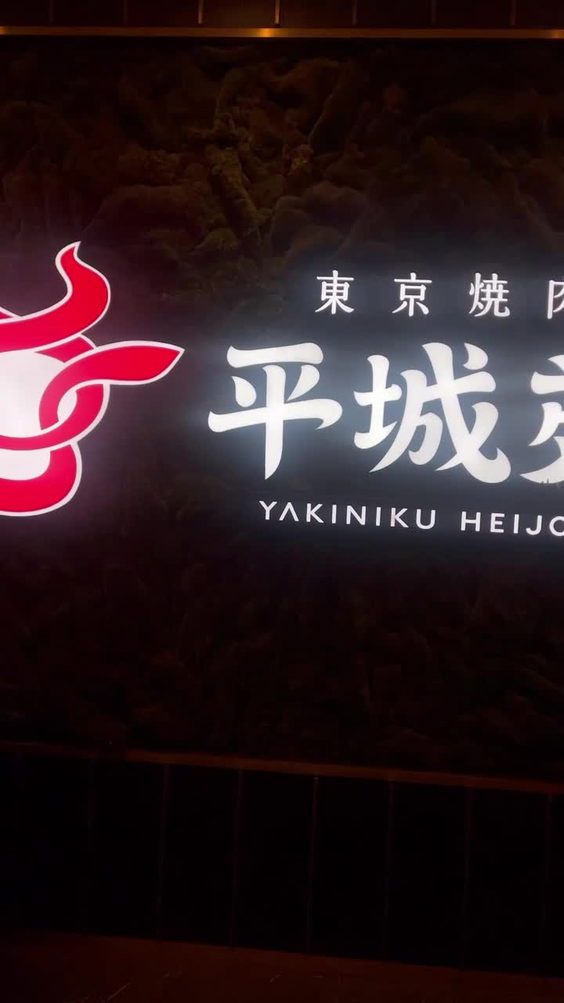
The video begins with a close-up of a Japanese-style beef bowl garnished with green onions, fried garlic chips, and a raw egg yolk, accompanied by side dishes like kimchi and bean sprouts. It then pans across the dining table, showing a variety of dishes and a grill, before shifting to the restaurant's interior, highlighting signage, menus, and ambiance. The video concludes by returning to the beef bowl, where it is seen being served with rice, kimchi, and lettuce.
 1K+ Views369 Likes
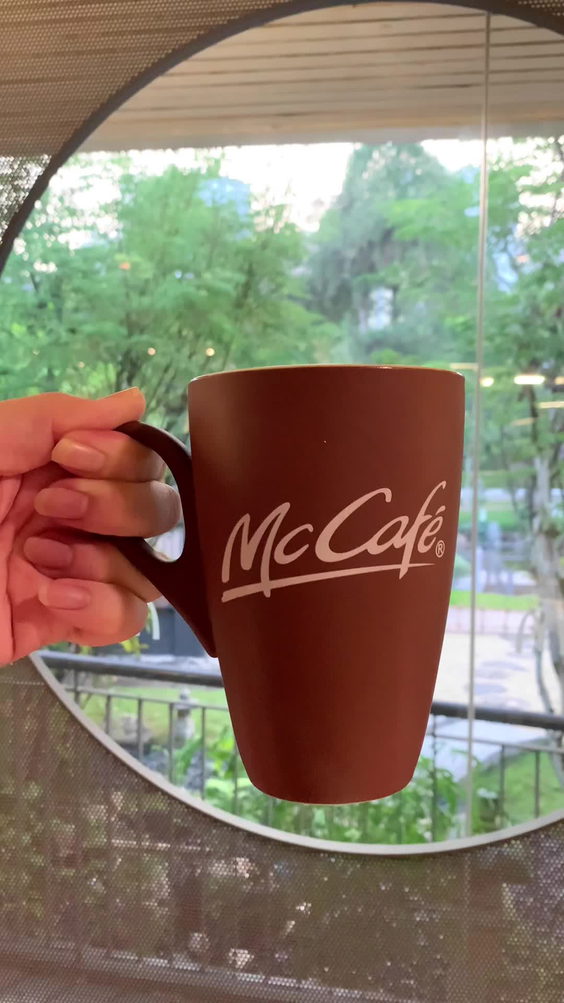
The video begins with a view of a McDonald's cafe surrounded by greenery, then pans to a Japanese garden. It transitions to a circular window view of the garden and ends with a close-up of a McCafé mug filled with hot chocolate.
 31K Views1.1K Likes
The video opens with a panoramic view of a bar area, showcasing people seated at tables and a bartender behind the counter. It then transitions to a close-up of a hand holding a glass of orange beer, with blurred figures in the background.
 1K+ Views335 Likes
The video captures the interior of a cafe, showing customers seated and standing near the counter. It includes a pan across the cafe, highlighting a world map decoration and a barista working. The focus then shifts to two men sitting at a table, one of whom is holding something small. The video ends with a close-up of a cup of iced coffee with ice cubes.
