
Din Tai Fung in Taipei
 1K+ Views
 100+ Likes
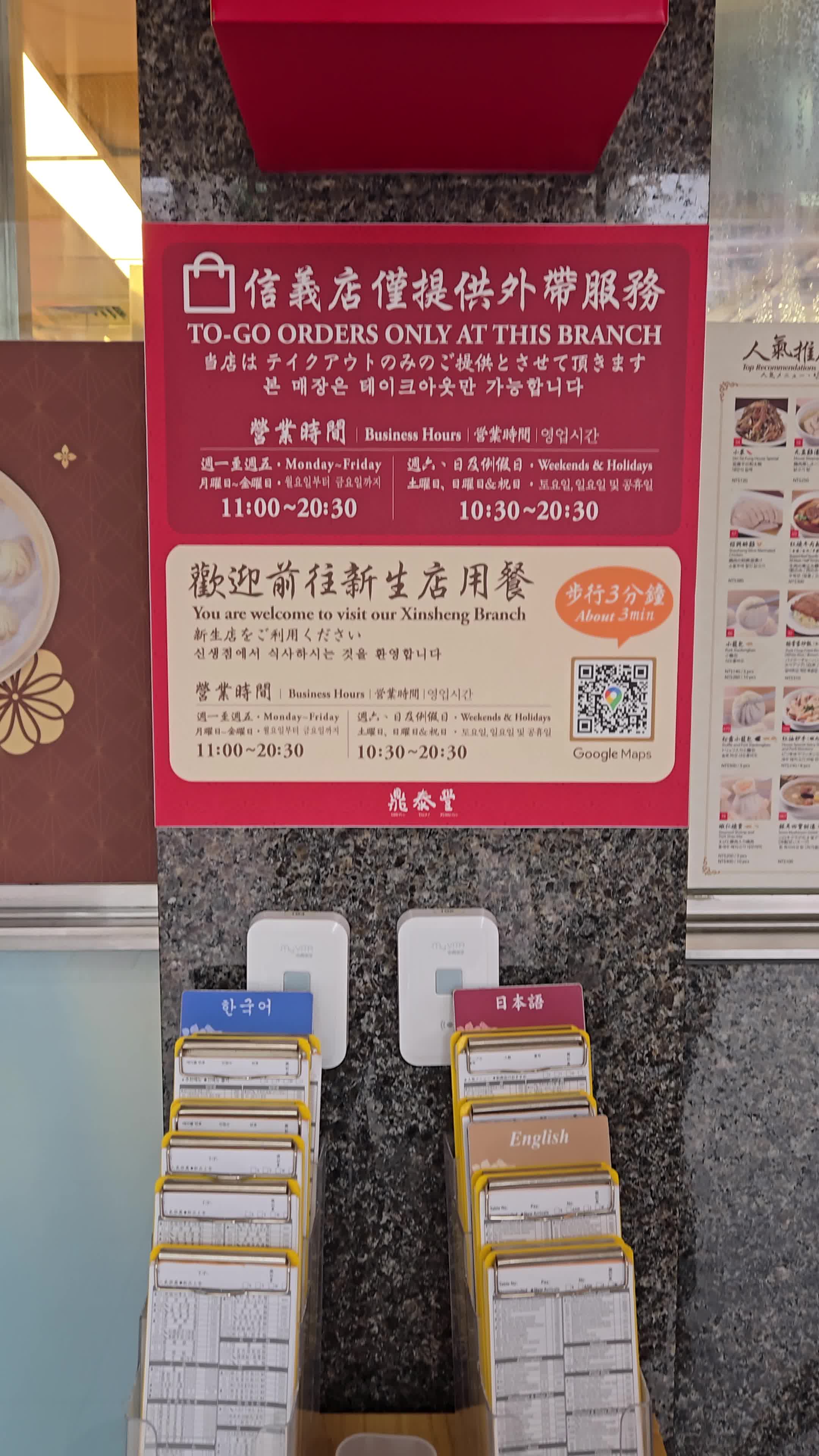
The video opens with a person speaking at 7 seconds, expressing their first-time viewing of the content. The visual focus is on a restaurant signage and informational display, featuring a red sign with Chinese characters and English text reading 'DINING,' 'TAIZI,' and 'FUNG PING.' Below it, a red poster displays ordering instructions and business hours in both Chinese and English. The camera then pans down to reveal a menu stand with multilingual menus (Chinese, English, Japanese). The video concludes with a close-up of a promotional poster for 'TAIZI FENG PING,' showcasing food images and a QR code for online ordering. The entire sequence is static and observational, with no human interaction or dynamic activity beyond the camera movement. The content centers on a clearly identifiable dining establishment with actionable information for visitors, including hours, ordering details, and digital access via QR code.
 1K+ Views100+ Likes
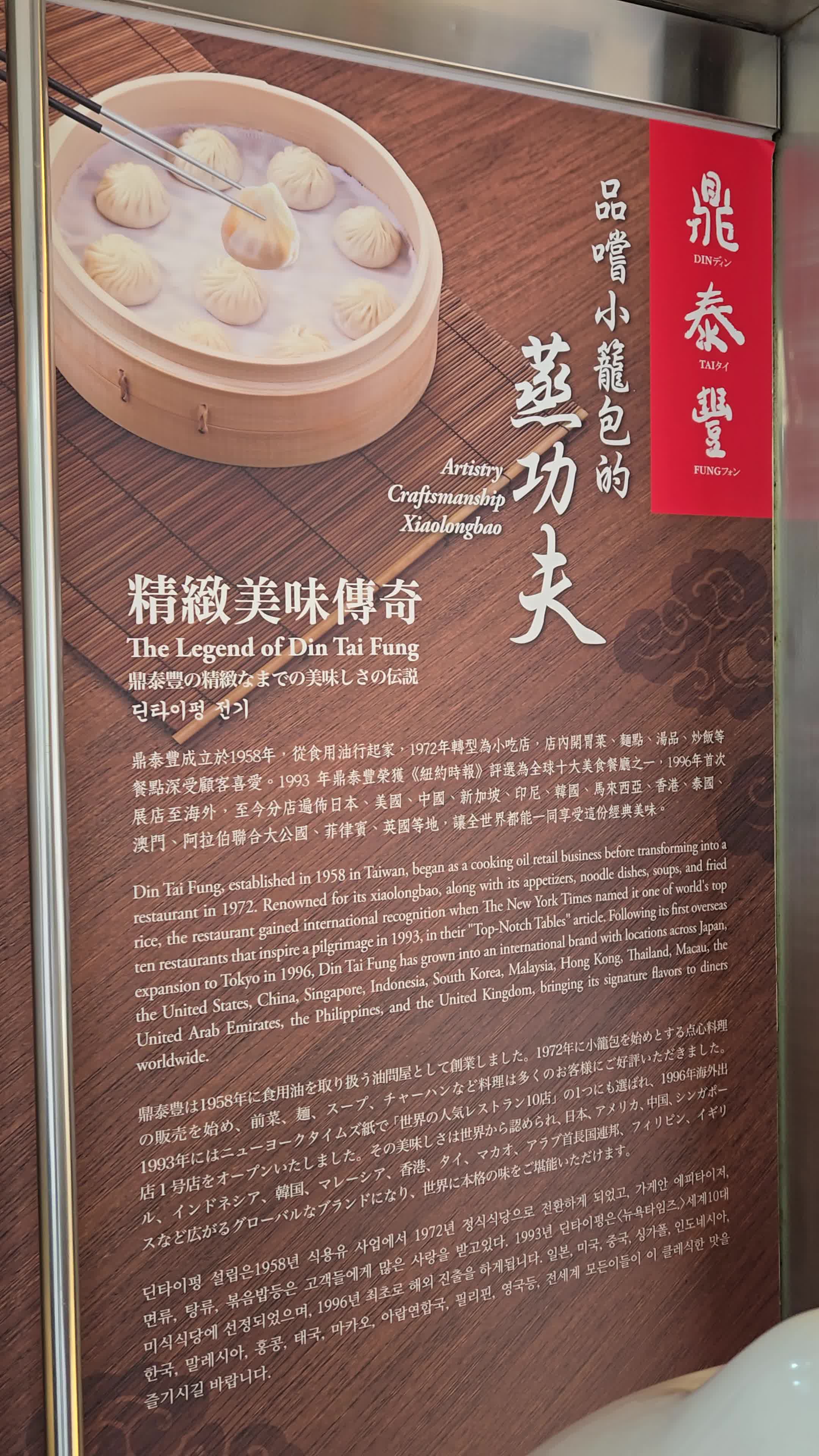
The video opens with a close-up of a whimsical, cartoon-style dumpling statue—white with a red bow tie and a smiling face—placed on a red pedestal adorned with Chinese characters. The camera pans right to reveal a wooden informational board titled 'The Legend of Di Tang Fu,' featuring a historical narrative about dumplings and a visual of a bamboo steamer filled with dumplings. It then transitions to a menu board displaying various dishes and prices, followed by a shot of a line of people waiting outside a restaurant, with a woman in a beige jacket walking past. The only spoken line, at 9–12 seconds, is 'ティーティーティー' (Tee-tee-tee), which may be a playful or brand-specific utterance, possibly referencing the dumpling theme or a local phrase. The entire sequence is visually cohesive, emphasizing cultural storytelling around a food experience, with clear signage, a defined location, and a visitor perspective.
 1K+ Views100+ Likes
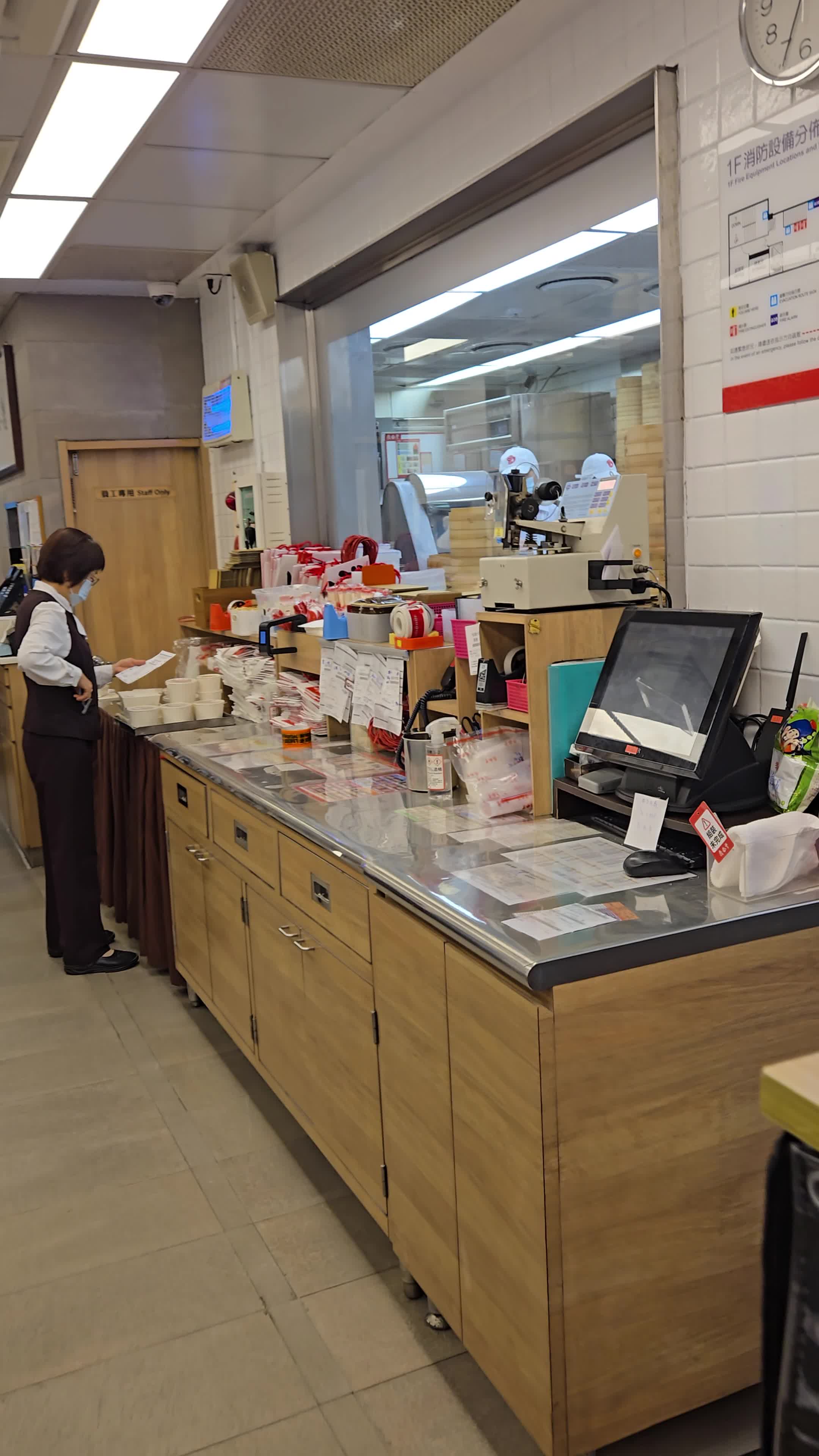
The video opens with a close-up of a restaurant sign displaying 'DIN TAZ FONG' in Chinese characters and English, followed by a smooth pan across the interior of a dining space. The camera reveals a counter with a staff member wearing a mask and apron, a wall adorned with a decorative image of dumplings, and a visible menu. At 8 seconds, a male voice asks, 'You want to use a pretty card?' to which another person responds, 'Sure,' suggesting a transaction or service interaction. The scene is static and observational, focusing on the restaurant's ambiance and layout without any dynamic action or human engagement beyond the masked staff member. The video ends with a final shot of the menu, emphasizing the establishment's offerings.
1K+ Views100+ LikesThe video opens with a person speaking at 7 seconds, expressing their first-time viewing of the content. The visual focus is on a restaurant signage and informational display, featuring a red sign with Chinese characters and English text reading 'DINING,' 'TAIZI,' and 'FUNG PING.' Below it, a red poster displays ordering instructions and business hours in both Chinese and English. The camera then pans down to reveal a menu stand with multilingual menus (Chinese, English, Japanese). The video concludes with a close-up of a promotional poster for 'TAIZI FENG PING,' showcasing food images and a QR code for online ordering. The entire sequence is static and observational, with no human interaction or dynamic activity beyond the camera movement. The content centers on a clearly identifiable dining establishment with actionable information for visitors, including hours, ordering details, and digital access via QR code.
1K+ Views100+ LikesThe video opens with a close-up of a whimsical, cartoon-style dumpling statue—white with a red bow tie and a smiling face—placed on a red pedestal adorned with Chinese characters. The camera pans right to reveal a wooden informational board titled 'The Legend of Di Tang Fu,' featuring a historical narrative about dumplings and a visual of a bamboo steamer filled with dumplings. It then transitions to a menu board displaying various dishes and prices, followed by a shot of a line of people waiting outside a restaurant, with a woman in a beige jacket walking past. The only spoken line, at 9–12 seconds, is 'ティーティーティー' (Tee-tee-tee), which may be a playful or brand-specific utterance, possibly referencing the dumpling theme or a local phrase. The entire sequence is visually cohesive, emphasizing cultural storytelling around a food experience, with clear signage, a defined location, and a visitor perspective.
1K+ Views100+ LikesThe video opens with a close-up of a restaurant sign displaying 'DIN TAZ FONG' in Chinese characters and English, followed by a smooth pan across the interior of a dining space. The camera reveals a counter with a staff member wearing a mask and apron, a wall adorned with a decorative image of dumplings, and a visible menu. At 8 seconds, a male voice asks, 'You want to use a pretty card?' to which another person responds, 'Sure,' suggesting a transaction or service interaction. The scene is static and observational, focusing on the restaurant's ambiance and layout without any dynamic action or human engagement beyond the masked staff member. The video ends with a final shot of the menu, emphasizing the establishment's offerings.


Happening Now in Taipei, TW
 1K+ Views137 Likes
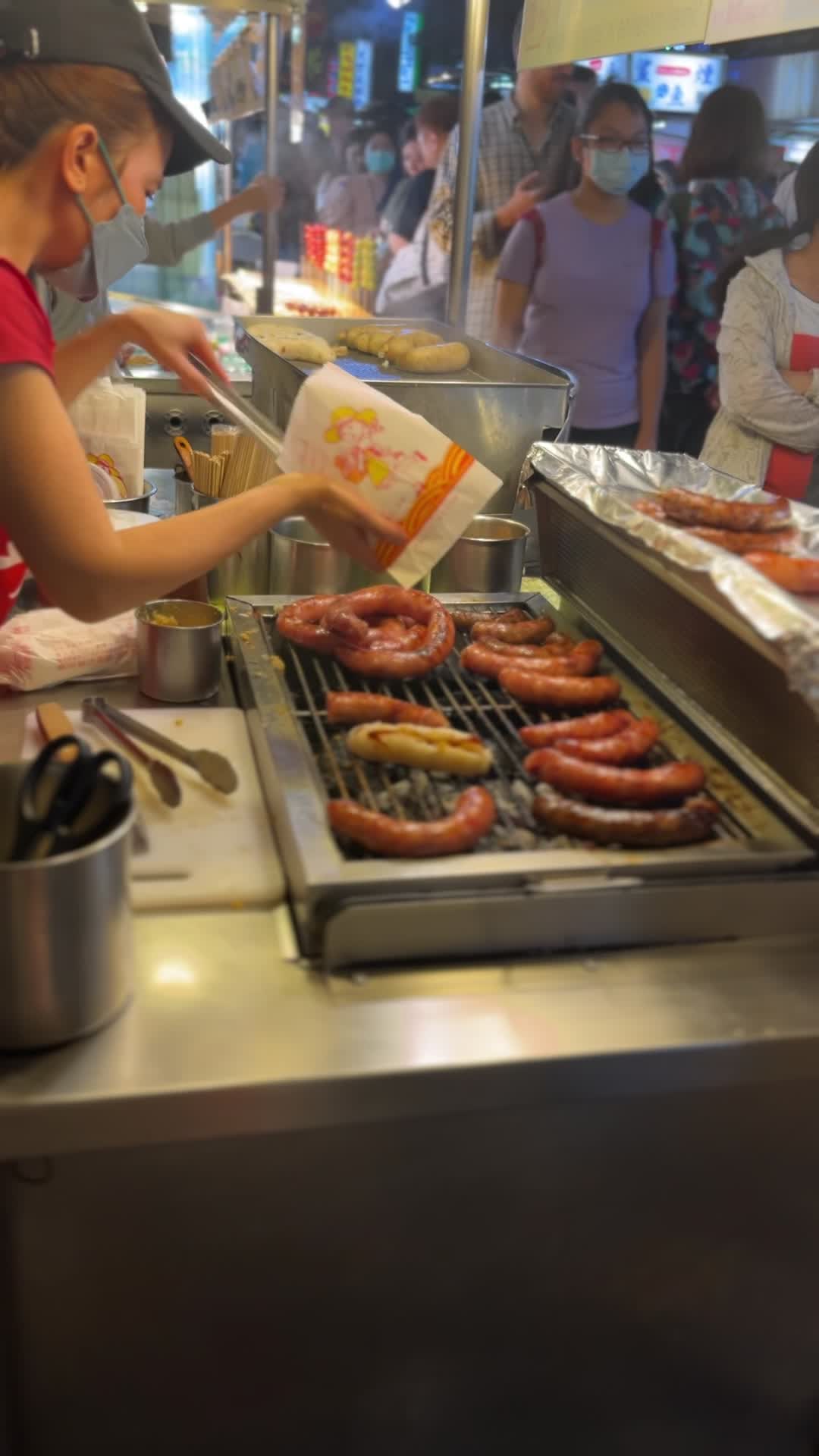
The video shows a vendor wearing a face mask and a baseball cap grilling various types of sausages on a metal grill at a food stall in a bustling night market. The vendor uses tongs to handle the sausages and places them into paper bags for customers. The background depicts a lively market scene with people walking around.
 1K+ Views116 Likes

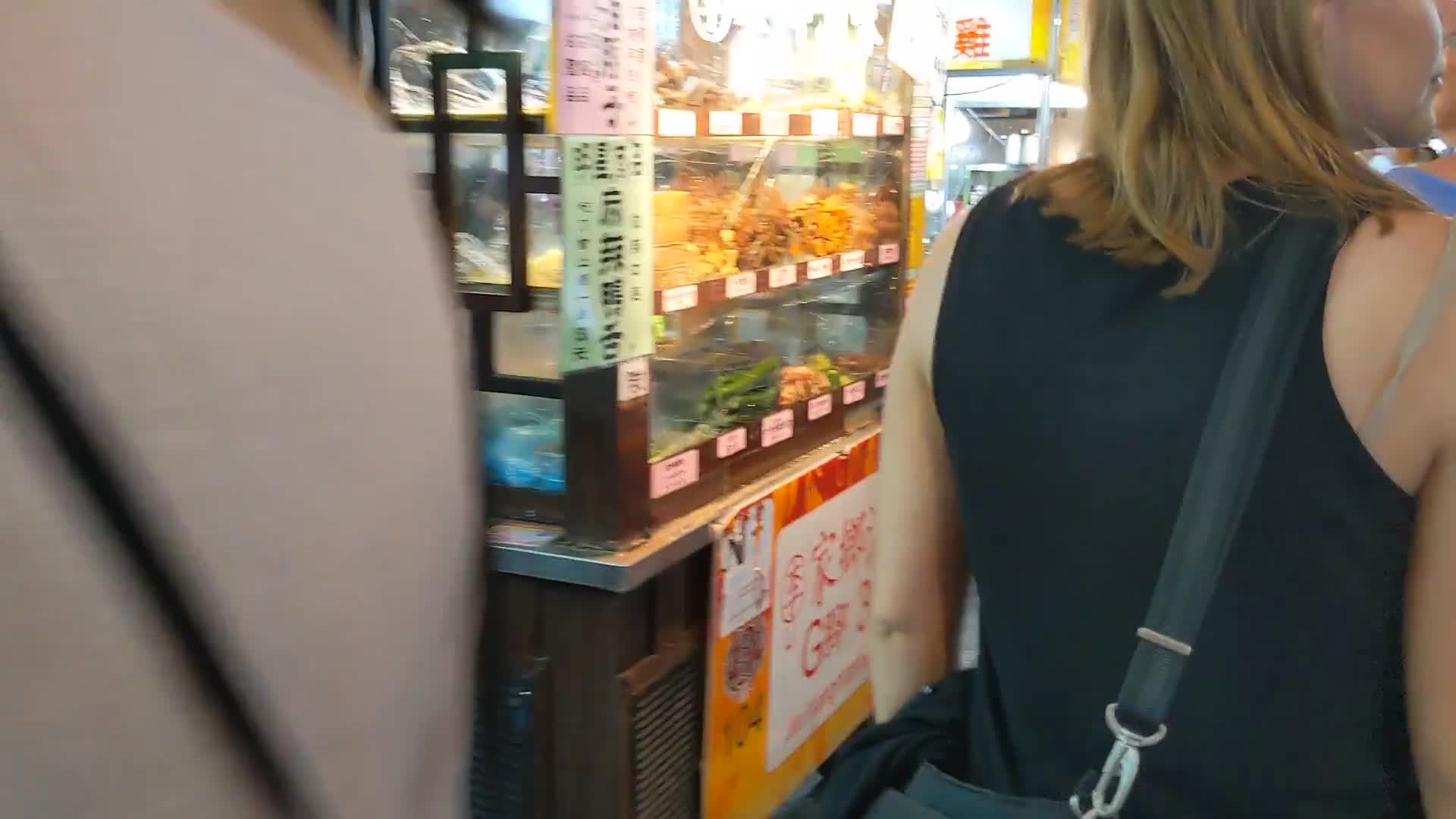
The video captures a bustling night market scene in Taiwan, showcasing various food stalls and the lively atmosphere. The camera moves through the crowd, highlighting different vendors and their offerings.
 1K+ Views128 Likes
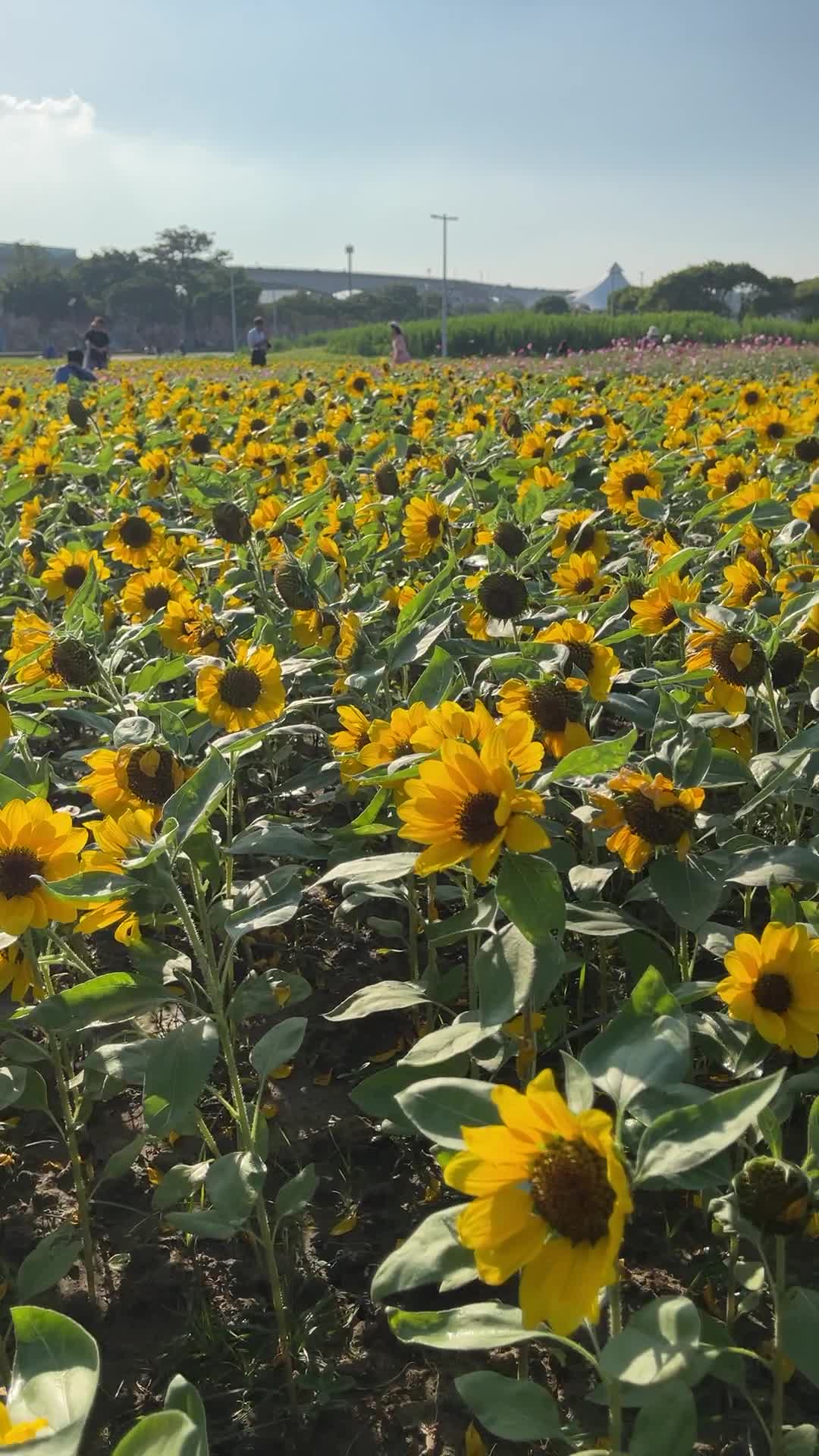
The video showcases a field of sunflowers under a clear sky, with the camera panning across the field to reveal more sunflowers and distant structures.
 1K+ Views122 Likes
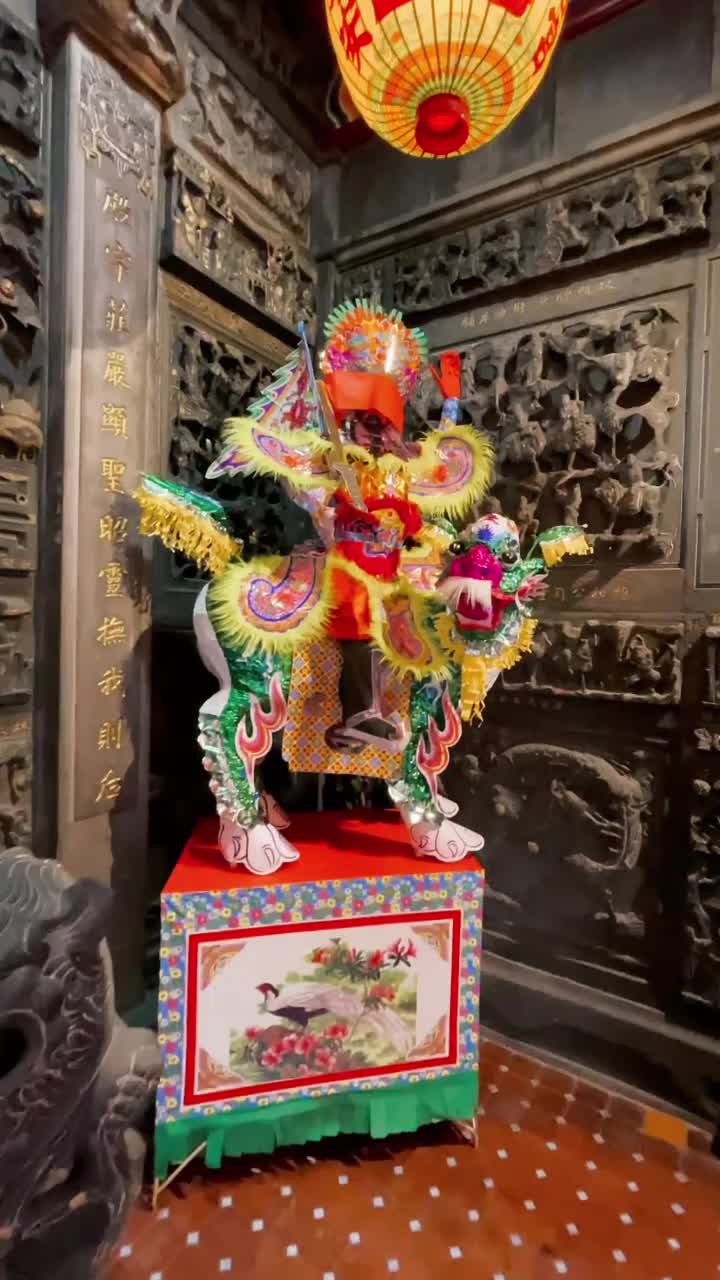
The video showcases the Zhongyuan Festival in Taiwan, featuring vibrant lanterns, traditional decorations, and cultural artifacts. It begins with a display of yellow and red lanterns, transitions to the interior of a temple with intricate carvings and colorful banners, and concludes with a statue of a deity-like figure.
