Pokey Okey Brighouse in Richmond
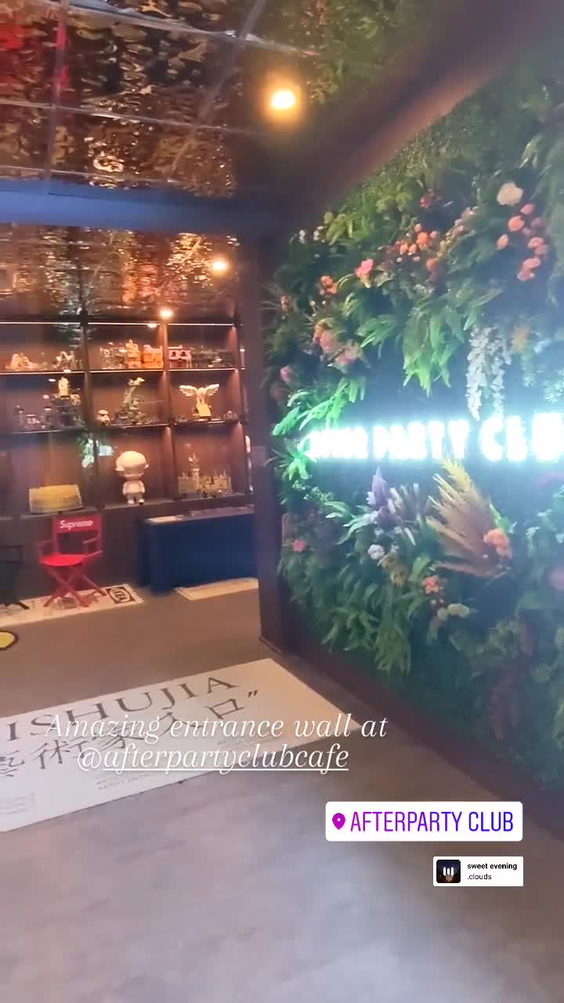
Pokey Okey Brighouse, located at 6386 Number 3 Rd in Richmond, BC, focuses on modern versions of classic Asian dishes, particularly brunch offerings. The restaurant features a bright and lively setting that attracts diners looking for a casual meal. With items like fusion rice bowls and innovative takes on traditional favorites, it appeals to a diverse crowd. Its creative menu and family-friendly atmosphere make it a popular choice for brunch.
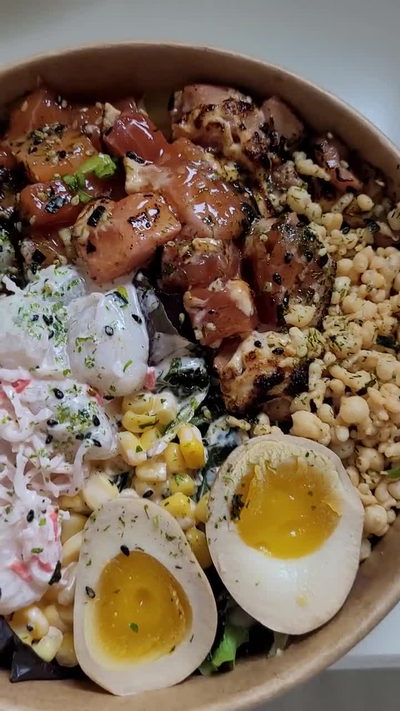
The video features a close-up, slow-motion shot of a colorful, meticulously arranged bowl of food, primarily showcasing a Japanese-inspired dish. At 00:06, a single word 'you' is spoken, possibly a misrecorded or isolated audio fragment. The visual focus remains on the bowl, which contains shrimp, corn, seaweed salad, and two soft-boiled egg halves, each ingredient placed in distinct sections. The camera slowly zooms out from the center, revealing the full composition and the vibrant, appetizing arrangement. The setting appears to be a clean, minimalist kitchen or studio environment, with no visible people, signage, or contextual cues about the restaurant or location. The food is presented with high visual appeal, emphasizing texture, color contrast, and symmetry, typical of high-end food photography or culinary content.
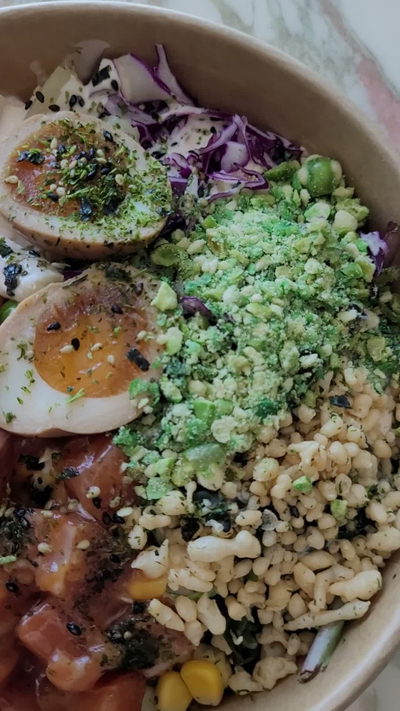
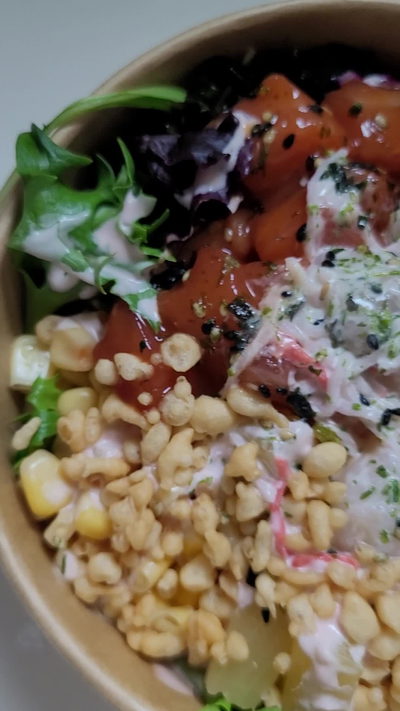
The video opens with a close-up shot of a vibrant, colorful bowl filled with a fresh, well-arranged salad. The ingredients include shredded purple cabbage, sliced tomatoes, green leafy vegetables, a halved boiled egg with a runny yolk, shredded white meat (likely chicken or tuna), small yellow corn kernels, and green herbs for garnish. The camera slowly zooms out, revealing the full composition and emphasizing the dish's visual appeal and texture. The entire sequence lasts approximately 8 seconds, with no spoken dialogue beyond a single word 'you' at the very beginning (0s–1s), which appears to be an accidental or irrelevant utterance. There is no visible signage, venue context, or human presence, and the setting is neutral and generic. The focus remains entirely on the food's presentation, with no indication of a restaurant, home kitchen, or specific dining experience. The video is shot in a vertical orientation, with smooth camera movement and clean framing, but lacks narrative context, editing transitions, or a clear hook. The content is purely visual and static in nature, resembling a stock-style food B-roll clip.
The video presents a close-up, static shot of a meticulously arranged bowl of food, featuring two halves of a soft-boiled egg with runny yolks, seared tuna cubes, shredded purple cabbage, chopped green onions, white rice, and a garnish of black sesame seeds. The composition is clean and visually appealing, with natural lighting highlighting the textures and vibrant colors of the ingredients. The camera remains fixed throughout the 8-second clip, offering a detailed view of the dish without movement or additional context. No dialogue or audio is present beyond a single word 'you' at the very beginning, which appears to be an isolated utterance with no clear connection to the visual content. The scene lacks any indication of a restaurant, chef, or human interaction, and there is no signage, venue, or narrative context to suggest a real-world location or experience that viewers could visit or replicate.
The video features a close-up, slow-motion shot of a colorful, meticulously arranged bowl of food, primarily showcasing a Japanese-inspired dish. At 00:06, a single word 'you' is spoken, possibly a misrecorded or isolated audio fragment. The visual focus remains on the bowl, which contains shrimp, corn, seaweed salad, and two soft-boiled egg halves, each ingredient placed in distinct sections. The camera slowly zooms out from the center, revealing the full composition and the vibrant, appetizing arrangement. The setting appears to be a clean, minimalist kitchen or studio environment, with no visible people, signage, or contextual cues about the restaurant or location. The food is presented with high visual appeal, emphasizing texture, color contrast, and symmetry, typical of high-end food photography or culinary content.
The video opens with a close-up shot of a vibrant, colorful bowl filled with a fresh, well-arranged salad. The ingredients include shredded purple cabbage, sliced tomatoes, green leafy vegetables, a halved boiled egg with a runny yolk, shredded white meat (likely chicken or tuna), small yellow corn kernels, and green herbs for garnish. The camera slowly zooms out, revealing the full composition and emphasizing the dish's visual appeal and texture. The entire sequence lasts approximately 8 seconds, with no spoken dialogue beyond a single word 'you' at the very beginning (0s–1s), which appears to be an accidental or irrelevant utterance. There is no visible signage, venue context, or human presence, and the setting is neutral and generic. The focus remains entirely on the food's presentation, with no indication of a restaurant, home kitchen, or specific dining experience. The video is shot in a vertical orientation, with smooth camera movement and clean framing, but lacks narrative context, editing transitions, or a clear hook. The content is purely visual and static in nature, resembling a stock-style food B-roll clip.
The video presents a close-up, static shot of a meticulously arranged bowl of food, featuring two halves of a soft-boiled egg with runny yolks, seared tuna cubes, shredded purple cabbage, chopped green onions, white rice, and a garnish of black sesame seeds. The composition is clean and visually appealing, with natural lighting highlighting the textures and vibrant colors of the ingredients. The camera remains fixed throughout the 8-second clip, offering a detailed view of the dish without movement or additional context. No dialogue or audio is present beyond a single word 'you' at the very beginning, which appears to be an isolated utterance with no clear connection to the visual content. The scene lacks any indication of a restaurant, chef, or human interaction, and there is no signage, venue, or narrative context to suggest a real-world location or experience that viewers could visit or replicate.