
Hibari in Portola Valley, California
 1K+ Views
 100+ Likes
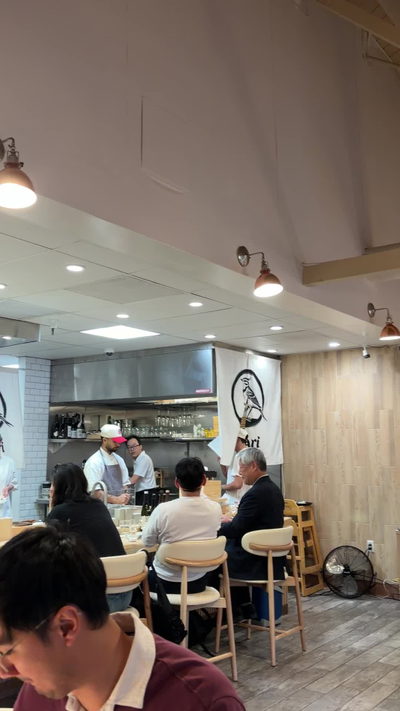
The video opens with a casual greeting, 'E aí E aí,' at 0:00–0:05, immediately establishing a friendly, informal tone. The scene then transitions into a smooth, continuous pan across the interior of a modern restaurant. The camera glides through the space, capturing patrons seated at wooden tables, engaged in conversation and dining. The restaurant features a clean, minimalist design with warm ambient lighting, contributing to a welcoming atmosphere. In the background, a kitchen area is visible, with chefs preparing food, adding authenticity to the dining experience. The visuals are steady and well-framed, with no abrupt cuts or edits, suggesting a deliberate, observational style. The entire clip is shot in a horizontal (landscape) orientation, typical of broadcast or stock-style footage, and lacks any on-screen text, signage, or clear indication of the restaurant's name or location. There is no narration or additional audio beyond the initial greeting, and the focus remains entirely on the visual experience of the space and its guests.
 1K+ Views100+ Likes
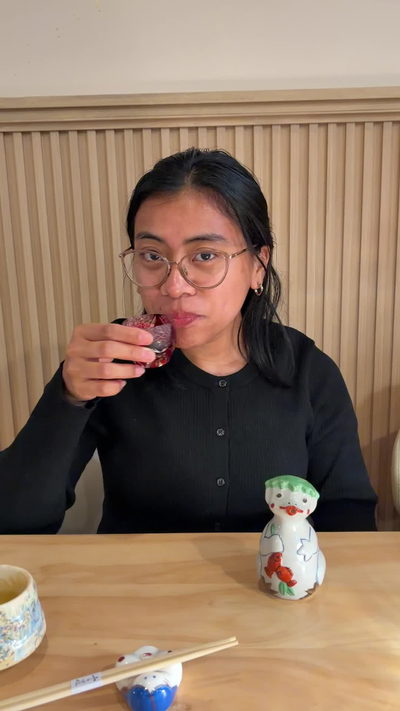
A woman with glasses and a black cardigan sits at a wooden table, smiling as she takes a sip from a small red, patterned cup. She then looks directly into the camera, creating a moment of connection. On the table are a white ceramic snowman figurine with a red scarf and blue hat, chopsticks, and a blue-and-white-patterned dish. The scene is intimate and carefully composed, suggesting a quiet, personal moment in a dining setting. The setting appears to be a cozy café or restaurant with subtle decorative elements, though no signage or clear venue identifiers are visible.
 1K+ Views100+ Likes
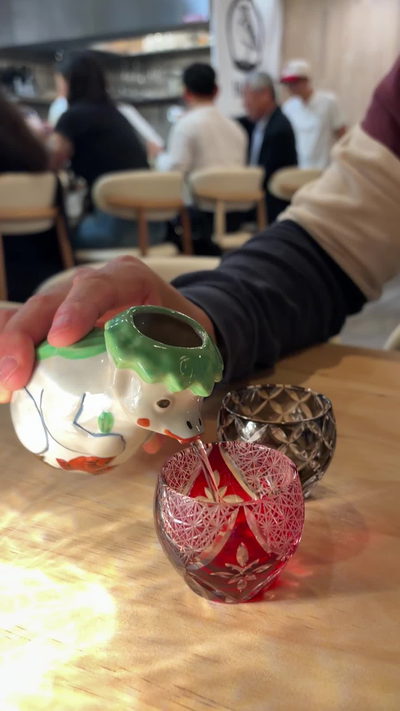
A hand holds a ceramic snowman-shaped container with a green top and white body adorned with orange and green details. At 00:04, the hand tilts the container, pouring a red liquid into a small, intricately patterned glass bowl with a red-and-white design, placed on a wooden table. The background features blurred figures of people seated at tables, indicating a restaurant or café setting. A brief 'Thank you' is spoken at 00:04–00:05, suggesting a moment of acknowledgment, possibly after service or presentation. The scene is focused on the act of pouring, with no visible signage, menu, or clear venue identity, and no narrative beyond the visual action.
1K+ Views100+ LikesThe video opens with a casual greeting, 'E aí E aí,' at 0:00–0:05, immediately establishing a friendly, informal tone. The scene then transitions into a smooth, continuous pan across the interior of a modern restaurant. The camera glides through the space, capturing patrons seated at wooden tables, engaged in conversation and dining. The restaurant features a clean, minimalist design with warm ambient lighting, contributing to a welcoming atmosphere. In the background, a kitchen area is visible, with chefs preparing food, adding authenticity to the dining experience. The visuals are steady and well-framed, with no abrupt cuts or edits, suggesting a deliberate, observational style. The entire clip is shot in a horizontal (landscape) orientation, typical of broadcast or stock-style footage, and lacks any on-screen text, signage, or clear indication of the restaurant's name or location. There is no narration or additional audio beyond the initial greeting, and the focus remains entirely on the visual experience of the space and its guests.
1K+ Views100+ LikesA woman with glasses and a black cardigan sits at a wooden table, smiling as she takes a sip from a small red, patterned cup. She then looks directly into the camera, creating a moment of connection. On the table are a white ceramic snowman figurine with a red scarf and blue hat, chopsticks, and a blue-and-white-patterned dish. The scene is intimate and carefully composed, suggesting a quiet, personal moment in a dining setting. The setting appears to be a cozy café or restaurant with subtle decorative elements, though no signage or clear venue identifiers are visible.
1K+ Views100+ LikesA hand holds a ceramic snowman-shaped container with a green top and white body adorned with orange and green details. At 00:04, the hand tilts the container, pouring a red liquid into a small, intricately patterned glass bowl with a red-and-white design, placed on a wooden table. The background features blurred figures of people seated at tables, indicating a restaurant or café setting. A brief 'Thank you' is spoken at 00:04–00:05, suggesting a moment of acknowledgment, possibly after service or presentation. The scene is focused on the act of pouring, with no visible signage, menu, or clear venue identity, and no narrative beyond the visual action.

