Nice Cafe in Markham

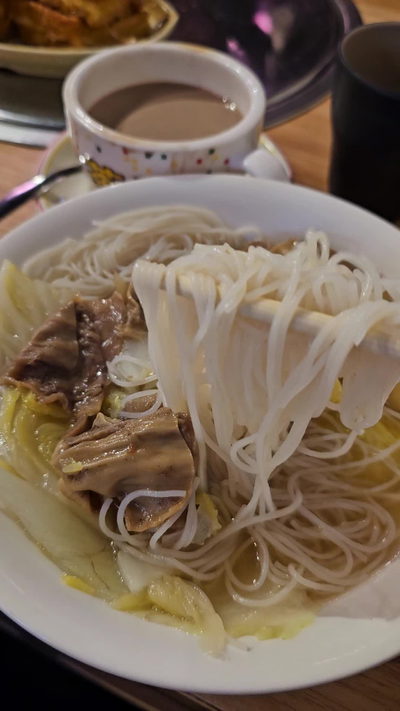
The video opens with a close-up of a steaming bowl of Asian-style noodle soup, featuring white noodles, tender meat chunks, and fresh vegetable slices. The camera captures the rising steam, emphasizing the warmth and freshness of the dish. A pair of chopsticks lifts a portion of noodles, highlighting their texture and consistency. The background includes a cup of tea and other dining accessories, suggesting a casual restaurant or café setting. At 0:00, a voice says 'Terima kasih' (Thank you), indicating a moment of gratitude, possibly from a server or diner. The scene is static and focused solely on the food, with no visible signage, people, or broader environment to identify the venue. The video is short, visually clean, and centered on the sensory appeal of the dish.

The video presents a close-up, static shot of a meal consisting of golden-brown, crispy fried tofu and a steaming bowl of soup containing meat, mushrooms, and vegetables. The focus remains fixed on the food throughout the 6-second duration, with no movement or additional context. The scene is visually appetizing, emphasizing texture and color, but lacks any human presence, signage, or environmental cues indicating a specific restaurant, location, or dining experience. There is no audio beyond a single Chinese character 'YK' at the start, which does not contribute to narrative or context. The video appears to be a standalone food still, possibly intended for social media or content platforms focused on culinary aesthetics.

The video opens with a close-up shot of a bowl of noodles topped with slices of pork, placed on a wooden table. The camera slowly pans to the right, revealing a cup of coffee and a black mug beside the bowl. The scene is static and focused solely on the food and drink, with no visible people, signage, or environmental context. The only audio is a brief greeting: '안녕하세요. 안녕하세요.' spoken at the beginning. The setting appears to be a casual dining or breakfast environment, possibly a café or home kitchen, but no specific location or venue is identifiable. The visuals are clean and well-framed, emphasizing the food's texture and presentation, but there is no narrative, movement, or indication of a real-world experience that viewers could replicate or visit.

The video opens with a close-up of a steaming bowl of Asian-style noodle soup, featuring white noodles, tender meat chunks, and fresh vegetable slices. The camera captures the rising steam, emphasizing the warmth and freshness of the dish. A pair of chopsticks lifts a portion of noodles, highlighting their texture and consistency. The background includes a cup of tea and other dining accessories, suggesting a casual restaurant or café setting. At 0:00, a voice says 'Terima kasih' (Thank you), indicating a moment of gratitude, possibly from a server or diner. The scene is static and focused solely on the food, with no visible signage, people, or broader environment to identify the venue. The video is short, visually clean, and centered on the sensory appeal of the dish.

The video presents a close-up, static shot of a meal consisting of golden-brown, crispy fried tofu and a steaming bowl of soup containing meat, mushrooms, and vegetables. The focus remains fixed on the food throughout the 6-second duration, with no movement or additional context. The scene is visually appetizing, emphasizing texture and color, but lacks any human presence, signage, or environmental cues indicating a specific restaurant, location, or dining experience. There is no audio beyond a single Chinese character 'YK' at the start, which does not contribute to narrative or context. The video appears to be a standalone food still, possibly intended for social media or content platforms focused on culinary aesthetics.

The video opens with a close-up shot of a bowl of noodles topped with slices of pork, placed on a wooden table. The camera slowly pans to the right, revealing a cup of coffee and a black mug beside the bowl. The scene is static and focused solely on the food and drink, with no visible people, signage, or environmental context. The only audio is a brief greeting: '안녕하세요. 안녕하세요.' spoken at the beginning. The setting appears to be a casual dining or breakfast environment, possibly a café or home kitchen, but no specific location or venue is identifiable. The visuals are clean and well-framed, emphasizing the food's texture and presentation, but there is no narrative, movement, or indication of a real-world experience that viewers could replicate or visit.