
Maki Mart in Toronto
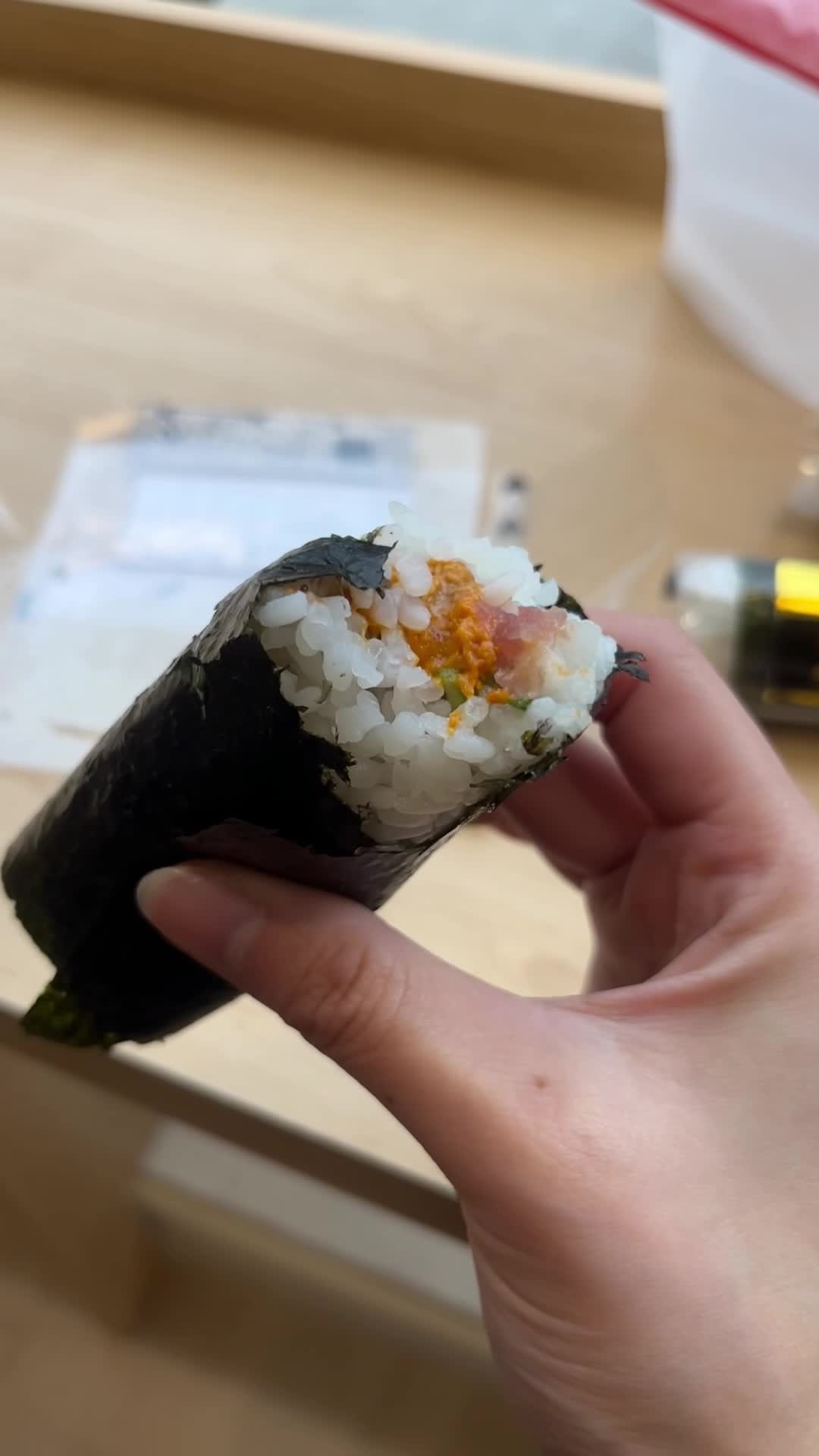

A close-up shot captures a hand gently unwrapping a traditional Japanese onigiri, revealing a neatly formed rice ball with a vibrant orange filling, likely salmon or tuna, wrapped in seaweed. The background is softly blurred, showing a wooden table with scattered papers and a plastic bag, suggesting a casual, domestic setting. The focus remains entirely on the texture, color, and craftsmanship of the onigiri, emphasizing its visual appeal and authenticity. No dialogue or audio is present, and the video lacks any contextual cues such as signage, venue branding, or human interaction beyond the hand handling the food. The shot is static, with no movement or narrative progression, and appears to be a single, unedited frame focused on the food item.
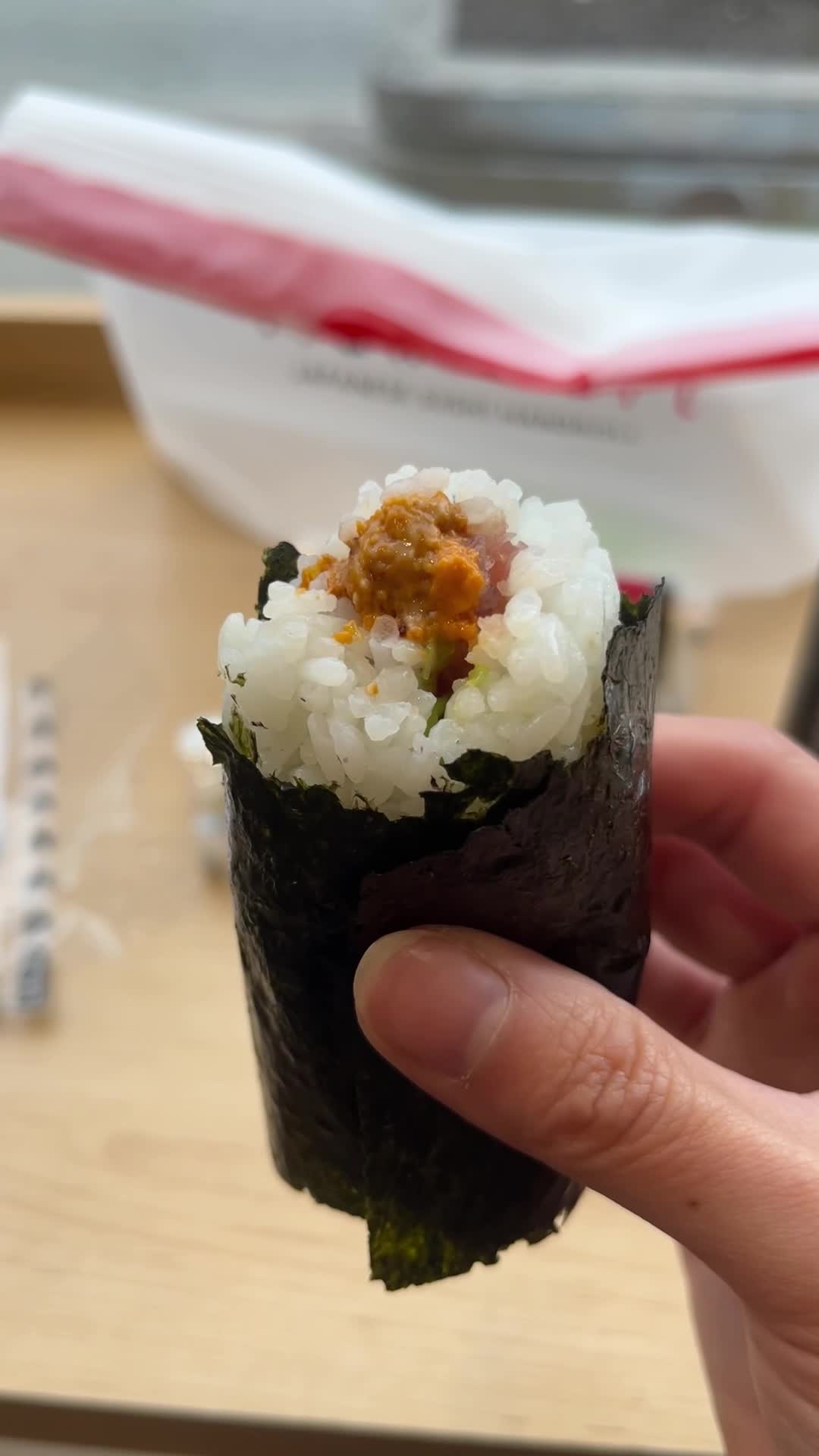
The video captures a close-up shot of a hand preparing and presenting a sushi hand roll, featuring a vibrant mix of white rice, fresh tuna, and roe, wrapped in nori seaweed. The background is softly blurred, suggesting an indoor setting with a wooden table and ambient lighting, likely a restaurant or kitchen environment. The focus remains entirely on the craftsmanship and visual appeal of the dish, emphasizing texture, color, and composition. There is no dialogue or audio, but the visual storytelling centers on the artistry of sushi-making, inviting viewers to appreciate the food as a sensory experience. The shot is static, with no movement beyond the hand’s subtle gestures, and lacks any indication of a specific venue, signage, or broader context. The video does not show the preparation process in full, nor does it feature people eating or interacting with the space, limiting the sense of a real-world visitable experience.
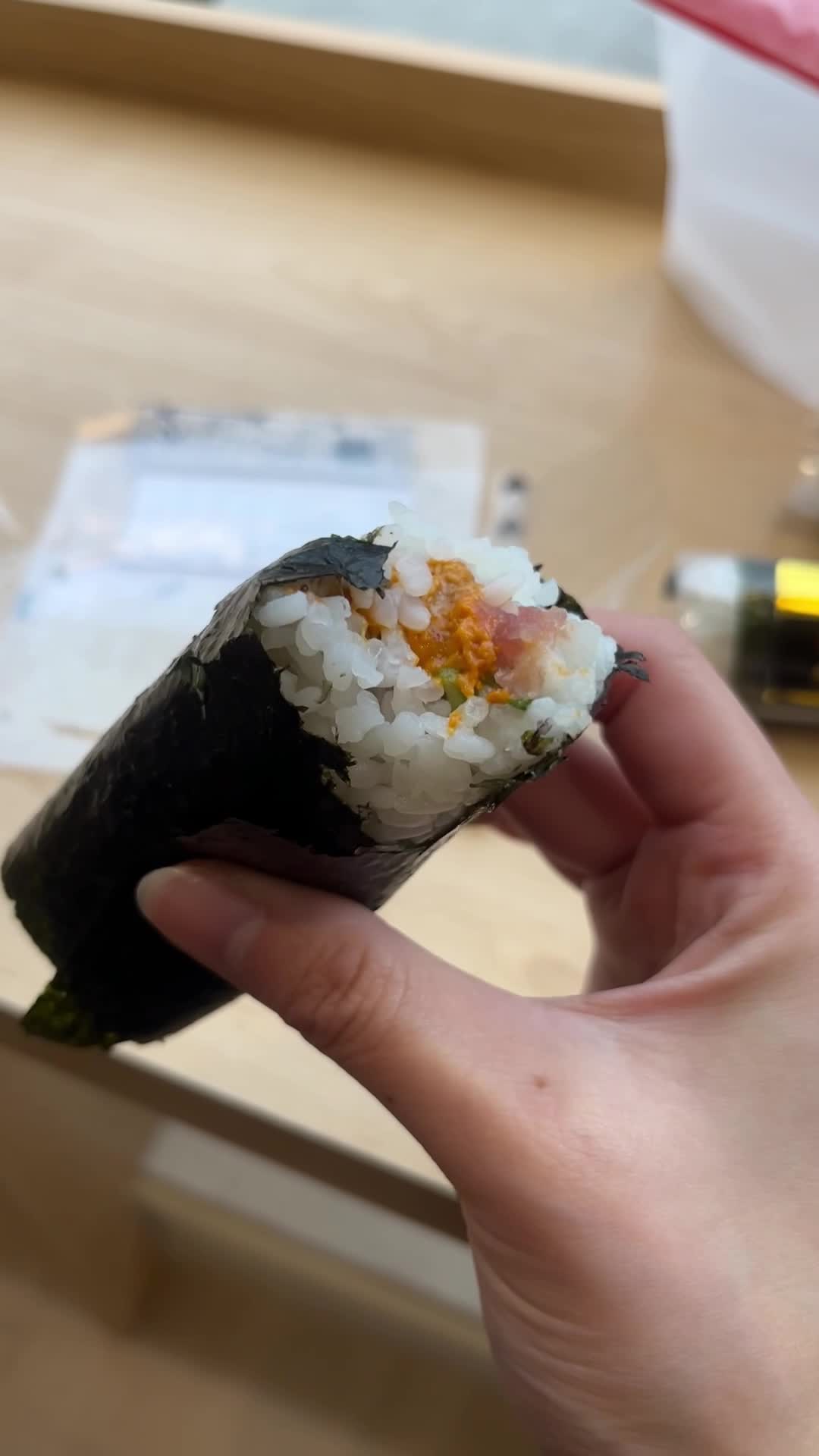
A close-up video captures a hand gently unwrapping a traditional Japanese onigiri, revealing a neatly formed rice ball with a vibrant orange filling, likely salmon or tuna, wrapped in seaweed. The background is softly blurred, showing a wooden table with scattered papers and a plastic bag, suggesting a casual, domestic setting. The focus remains entirely on the food, emphasizing its texture, color, and craftsmanship. The video is silent, with no dialogue or ambient sound, and maintains a static, unedited frame throughout, highlighting the visual appeal of the dish without narrative context or action beyond the unwrapping gesture.
A close-up shot captures a hand gently unwrapping a traditional Japanese onigiri, revealing a neatly formed rice ball with a vibrant orange filling, likely salmon or tuna, wrapped in seaweed. The background is softly blurred, showing a wooden table with scattered papers and a plastic bag, suggesting a casual, domestic setting. The focus remains entirely on the texture, color, and craftsmanship of the onigiri, emphasizing its visual appeal and authenticity. No dialogue or audio is present, and the video lacks any contextual cues such as signage, venue branding, or human interaction beyond the hand handling the food. The shot is static, with no movement or narrative progression, and appears to be a single, unedited frame focused on the food item.
The video captures a close-up shot of a hand preparing and presenting a sushi hand roll, featuring a vibrant mix of white rice, fresh tuna, and roe, wrapped in nori seaweed. The background is softly blurred, suggesting an indoor setting with a wooden table and ambient lighting, likely a restaurant or kitchen environment. The focus remains entirely on the craftsmanship and visual appeal of the dish, emphasizing texture, color, and composition. There is no dialogue or audio, but the visual storytelling centers on the artistry of sushi-making, inviting viewers to appreciate the food as a sensory experience. The shot is static, with no movement beyond the hand’s subtle gestures, and lacks any indication of a specific venue, signage, or broader context. The video does not show the preparation process in full, nor does it feature people eating or interacting with the space, limiting the sense of a real-world visitable experience.
A close-up video captures a hand gently unwrapping a traditional Japanese onigiri, revealing a neatly formed rice ball with a vibrant orange filling, likely salmon or tuna, wrapped in seaweed. The background is softly blurred, showing a wooden table with scattered papers and a plastic bag, suggesting a casual, domestic setting. The focus remains entirely on the food, emphasizing its texture, color, and craftsmanship. The video is silent, with no dialogue or ambient sound, and maintains a static, unedited frame throughout, highlighting the visual appeal of the dish without narrative context or action beyond the unwrapping gesture.

