
Swee Choon Tim Sum Restaurant - Singapore Changi Airport Terminal 2 in Singapore
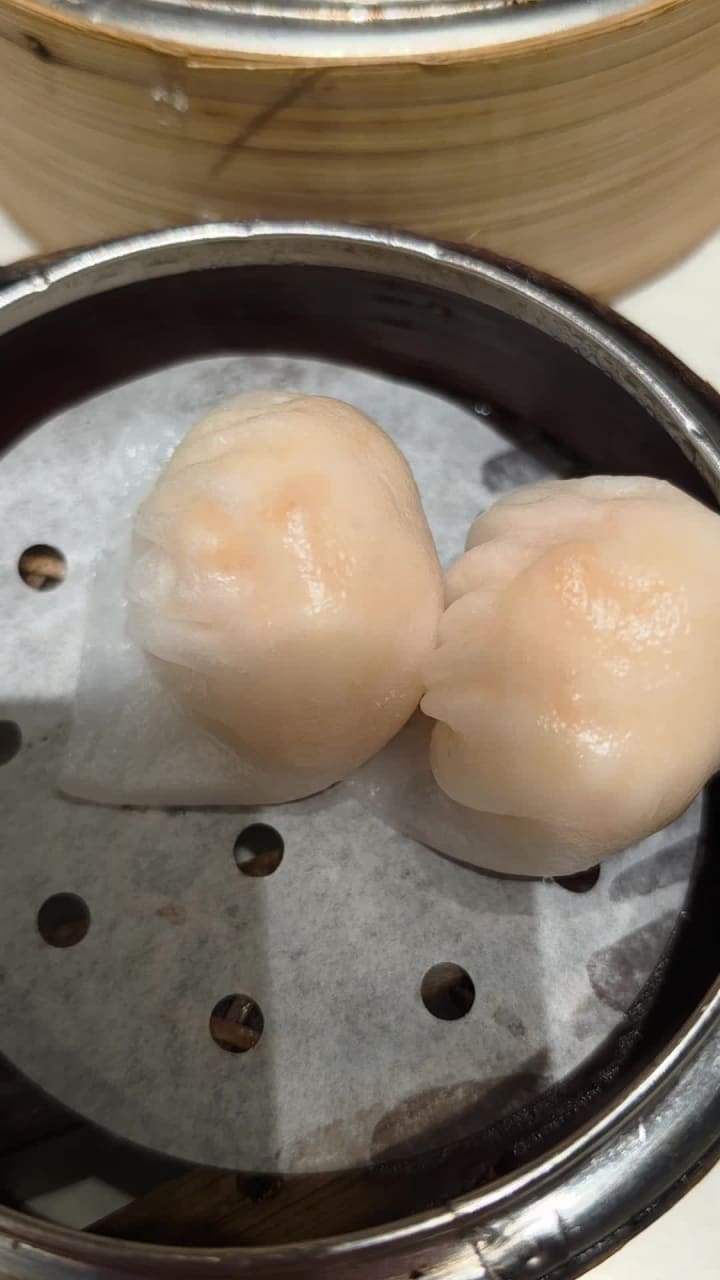

The video presents a close-up, visually focused sequence of two types of dim sum dishes. It begins at 0:00 with a detailed shot of two translucent, steamed dumplings—likely har gow—placed on a black steamer tray with a white paper liner. The camera smoothly pans upward to reveal two white, fluffy bao buns resting on a bamboo steamer liner above. The composition emphasizes texture, light, and contrast, with the dark tray and white paper enhancing the visual clarity of the food. The camera then pans back down to the original dumplings before the clip ends. The entire sequence is silent, with no dialogue or audio, and maintains a consistent vertical framing throughout, suggesting a mobile or handheld shot style. The video lacks any signage, human presence, or contextual cues to a specific restaurant or location, but the food items are unmistakably associated with Chinese cuisine and dim sum culture.
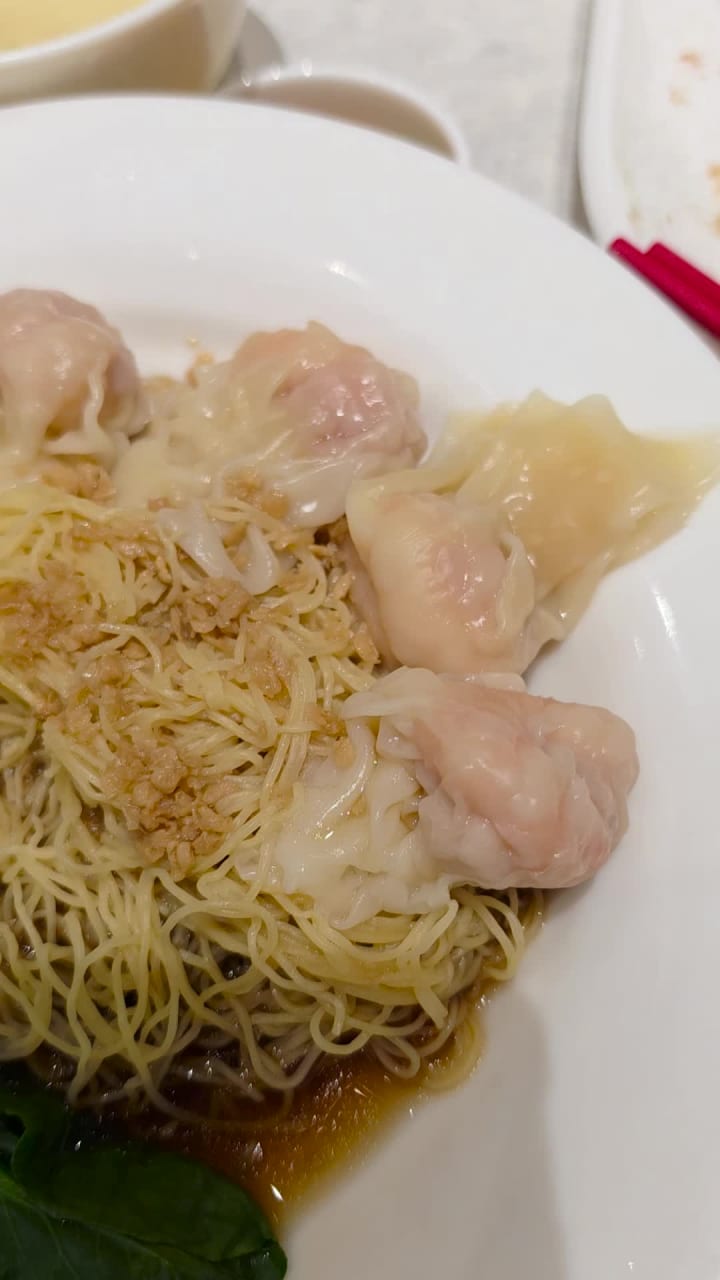
The video presents a close-up shot of a steaming bowl of Asian-style noodle dish, featuring thin yellow noodles coated in a rich dark sauce, topped with several dumplings and garnished with chopped green onions. A small bowl of soup with floating green onions and a cup of tea or broth are visible in the background, suggesting a complete meal setup. The camera slowly pans right, revealing the full composition of the dish and the surrounding table setting, emphasizing the food's texture, color, and arrangement. The scene is static and focused solely on the dish, with no human presence, dialogue, or environmental context beyond the table and kitchen-like backdrop. There is no audio, and the video appears to be a single, unedited shot with no narrative or editing transitions.
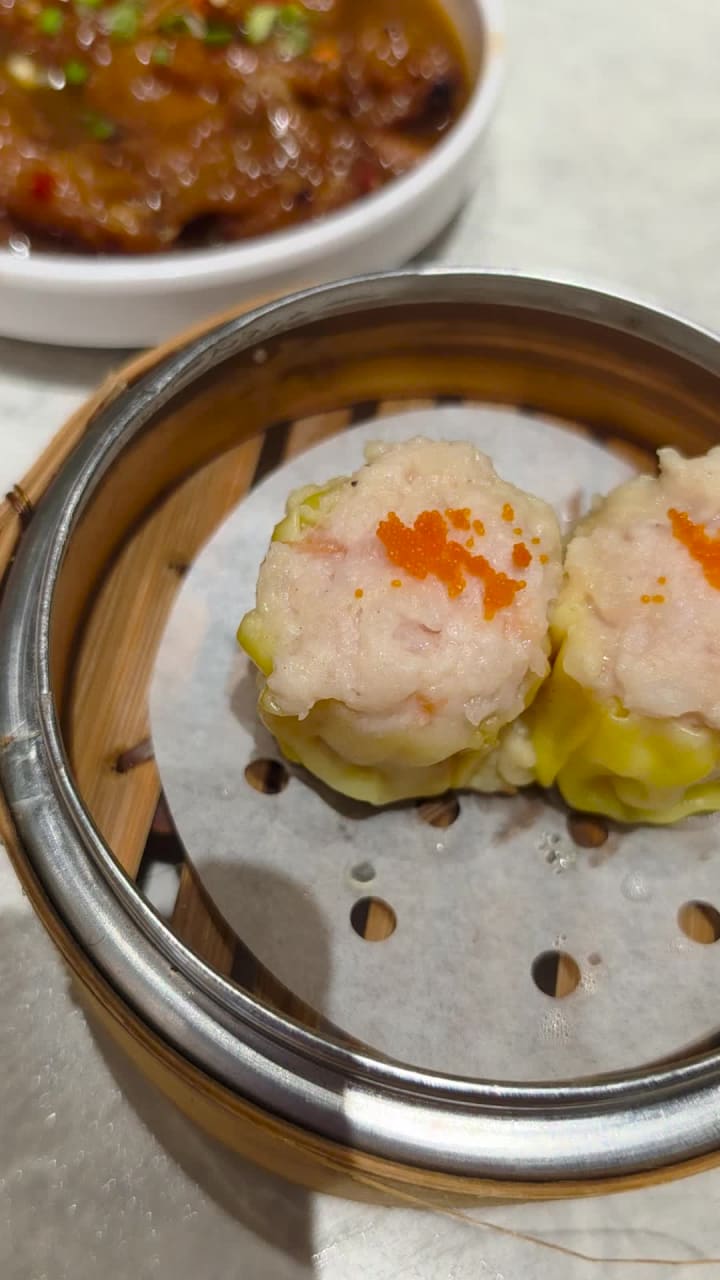
The video presents a static, close-up shot of two traditional Chinese dim sum dishes: on the left, a bamboo steamer holding two translucent har gow dumplings filled with shrimp and topped with orange roe; on the right, a white bowl containing beef brisket in rich brown sauce, garnished with green onions and red chili peppers. The camera remains fixed throughout the 4-second clip, focusing entirely on the food with no movement, audio, or contextual cues. The composition is clean and well-framed, emphasizing the textures and colors of the dishes, but there is no indication of a restaurant setting, service, or human interaction. The video is silent and lacks any narrative or dynamic elements.
The video presents a close-up, visually focused sequence of two types of dim sum dishes. It begins at 0:00 with a detailed shot of two translucent, steamed dumplings—likely har gow—placed on a black steamer tray with a white paper liner. The camera smoothly pans upward to reveal two white, fluffy bao buns resting on a bamboo steamer liner above. The composition emphasizes texture, light, and contrast, with the dark tray and white paper enhancing the visual clarity of the food. The camera then pans back down to the original dumplings before the clip ends. The entire sequence is silent, with no dialogue or audio, and maintains a consistent vertical framing throughout, suggesting a mobile or handheld shot style. The video lacks any signage, human presence, or contextual cues to a specific restaurant or location, but the food items are unmistakably associated with Chinese cuisine and dim sum culture.
The video presents a close-up shot of a steaming bowl of Asian-style noodle dish, featuring thin yellow noodles coated in a rich dark sauce, topped with several dumplings and garnished with chopped green onions. A small bowl of soup with floating green onions and a cup of tea or broth are visible in the background, suggesting a complete meal setup. The camera slowly pans right, revealing the full composition of the dish and the surrounding table setting, emphasizing the food's texture, color, and arrangement. The scene is static and focused solely on the dish, with no human presence, dialogue, or environmental context beyond the table and kitchen-like backdrop. There is no audio, and the video appears to be a single, unedited shot with no narrative or editing transitions.
The video presents a static, close-up shot of two traditional Chinese dim sum dishes: on the left, a bamboo steamer holding two translucent har gow dumplings filled with shrimp and topped with orange roe; on the right, a white bowl containing beef brisket in rich brown sauce, garnished with green onions and red chili peppers. The camera remains fixed throughout the 4-second clip, focusing entirely on the food with no movement, audio, or contextual cues. The composition is clean and well-framed, emphasizing the textures and colors of the dishes, but there is no indication of a restaurant setting, service, or human interaction. The video is silent and lacks any narrative or dynamic elements.

