
David’s Tea House Versailles Town Center in Las Piñas
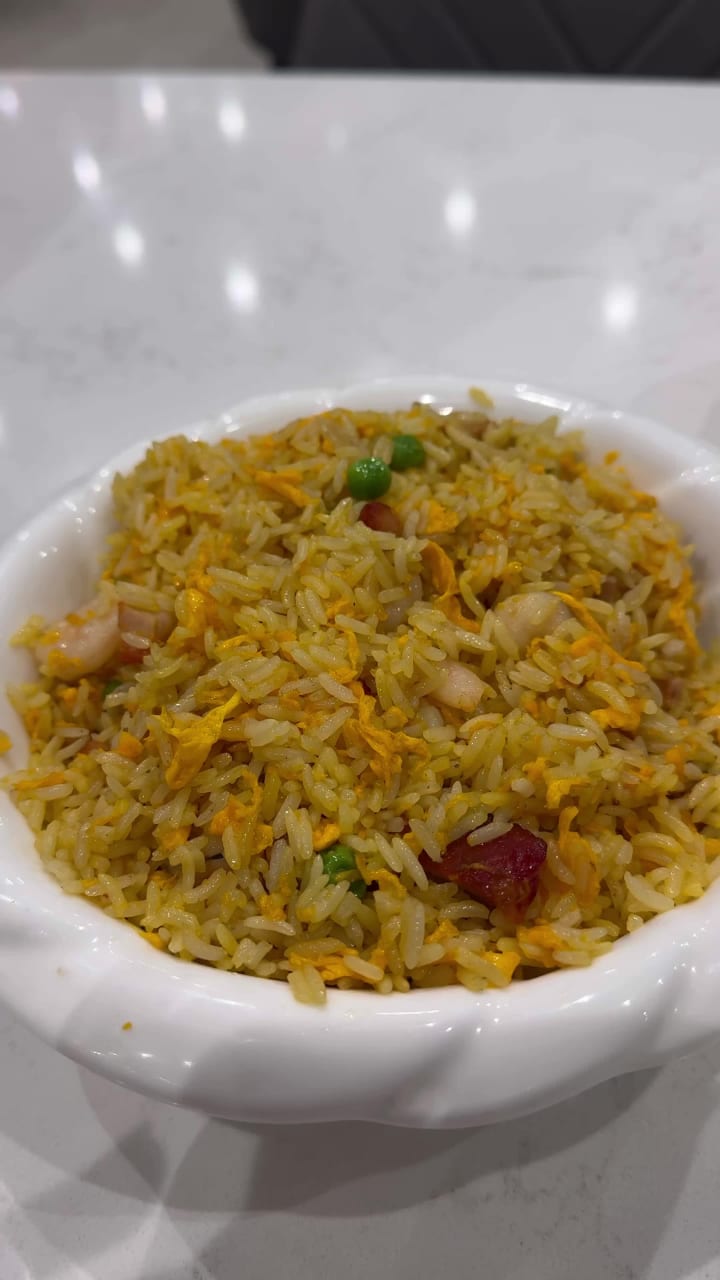

The video opens with a brief 'Thank you' at 0:00, followed by a visually focused sequence showcasing a variety of Chinese dishes. The camera begins with a close-up of a bowl of fried rice, highlighting visible ingredients like peas and small pieces of meat. It then pans smoothly to reveal a bamboo steamer containing three xiao long bao (soup dumplings), followed by another steamer with three har gow (shrimp dumplings). A small white bowl with a dark sauce—likely soy sauce—is shown next, adding context to the meal’s accompaniments. The final shot reveals a plate of shrimp toast garnished with fresh lettuce and a cherry tomato, emphasizing the dish’s vibrant presentation. The entire sequence is shot in a clean, minimalist setting with consistent lighting, suggesting a professional food photography setup. There is no dialogue beyond the initial 'Thank you,' and no visible signage, people, or context indicating a specific restaurant or venue, but the dishes are clearly identifiable and authentic to Chinese cuisine. The video is static in nature, with no movement beyond the camera pan, and lacks narrative or emotional context, relying solely on visual appeal.
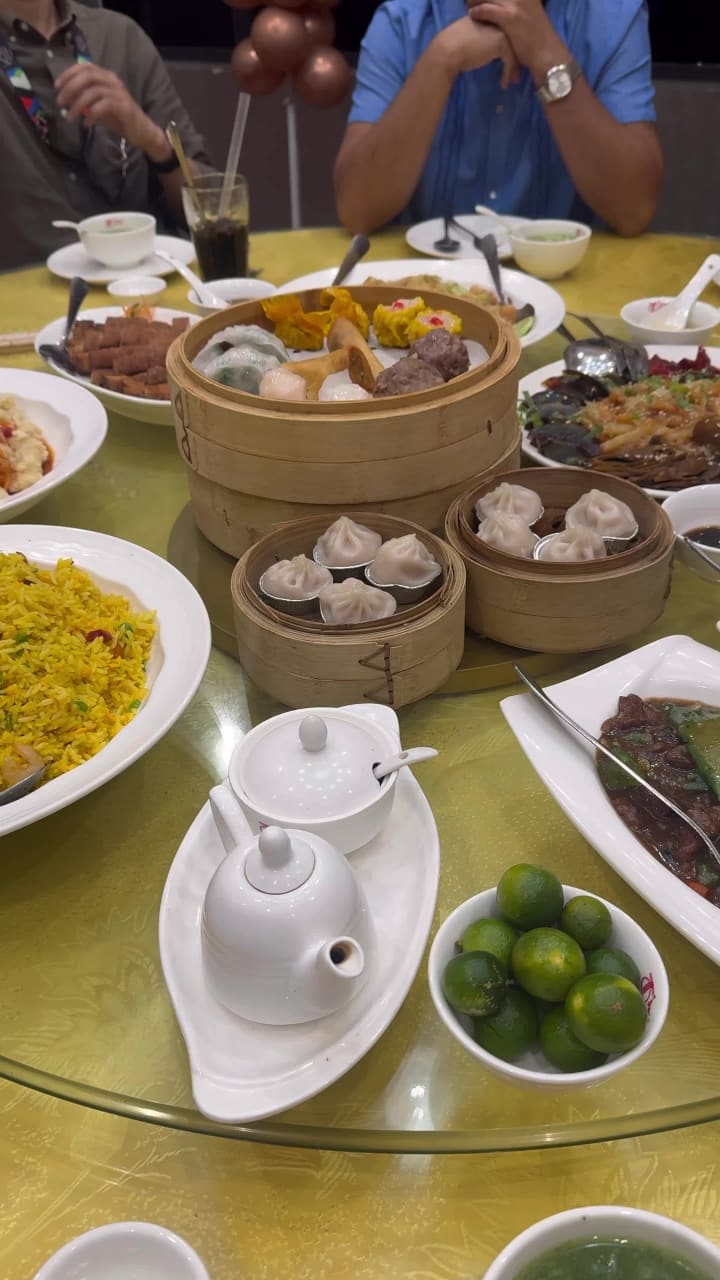
The video features a visually appealing, static shot of a spread of Chinese cuisine displayed on a table, with the camera panning smoothly from left to right. The scene includes a variety of dishes such as dim sum, noodles, rice, and assorted meat and vegetable preparations, all arranged neatly to highlight their colors and textures. The only audio is a brief 'Thank you.' at the beginning, with no additional dialogue or ambient sound. The shot is entirely focused on the food, with no people, signage, or contextual cues indicating a specific restaurant or location. The presentation is clean and well-lit, emphasizing the visual richness of the meal.
The video opens with a brief 'Thank you' at 0:00, followed by a visually focused sequence showcasing a variety of Chinese dishes. The camera begins with a close-up of a bowl of fried rice, highlighting visible ingredients like peas and small pieces of meat. It then pans smoothly to reveal a bamboo steamer containing three xiao long bao (soup dumplings), followed by another steamer with three har gow (shrimp dumplings). A small white bowl with a dark sauce—likely soy sauce—is shown next, adding context to the meal’s accompaniments. The final shot reveals a plate of shrimp toast garnished with fresh lettuce and a cherry tomato, emphasizing the dish’s vibrant presentation. The entire sequence is shot in a clean, minimalist setting with consistent lighting, suggesting a professional food photography setup. There is no dialogue beyond the initial 'Thank you,' and no visible signage, people, or context indicating a specific restaurant or venue, but the dishes are clearly identifiable and authentic to Chinese cuisine. The video is static in nature, with no movement beyond the camera pan, and lacks narrative or emotional context, relying solely on visual appeal.
The video features a visually appealing, static shot of a spread of Chinese cuisine displayed on a table, with the camera panning smoothly from left to right. The scene includes a variety of dishes such as dim sum, noodles, rice, and assorted meat and vegetable preparations, all arranged neatly to highlight their colors and textures. The only audio is a brief 'Thank you.' at the beginning, with no additional dialogue or ambient sound. The shot is entirely focused on the food, with no people, signage, or contextual cues indicating a specific restaurant or location. The presentation is clean and well-lit, emphasizing the visual richness of the meal.

