
Higashiyama Hills in Kyōto
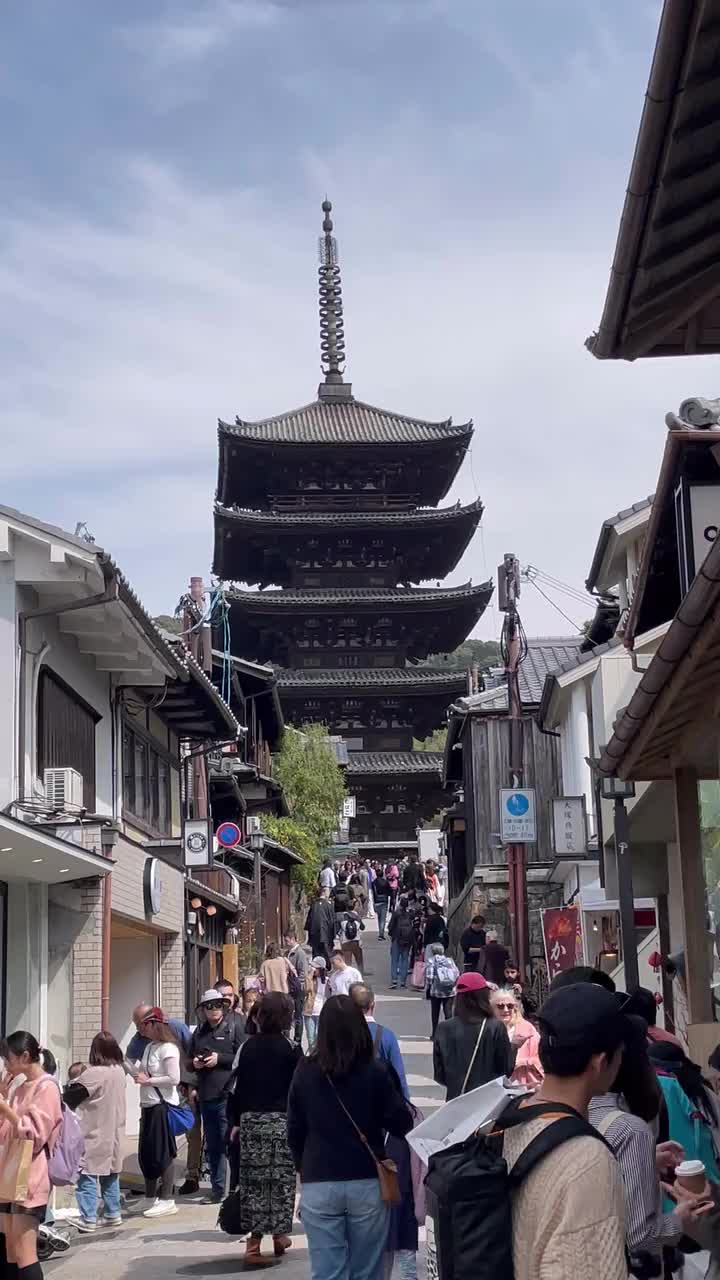

The video captures a dynamic street scene in Japan, beginning with a wide-angle shot of a bustling urban street lined with traditional and modern buildings. A couple walks away from the camera, moving toward a prominent pagoda visible in the distance. The camera follows them smoothly, revealing a lively atmosphere with pedestrians, cyclists, and occasional vehicles. The setting suggests a cultural or historical district, possibly in a city like Kyoto or Nara, where such architecture is common. The scene conveys a sense of movement and exploration, emphasizing the experience of walking through a vibrant, authentic Japanese neighborhood. The audio begins with a single word, 'you,' spoken softly at the start, possibly indicating a voiceover or interactive element, though it is brief and unelaborated. The visual content is rich in cultural detail, with signage, architectural elements, and human activity contributing to a strong sense of place and context.
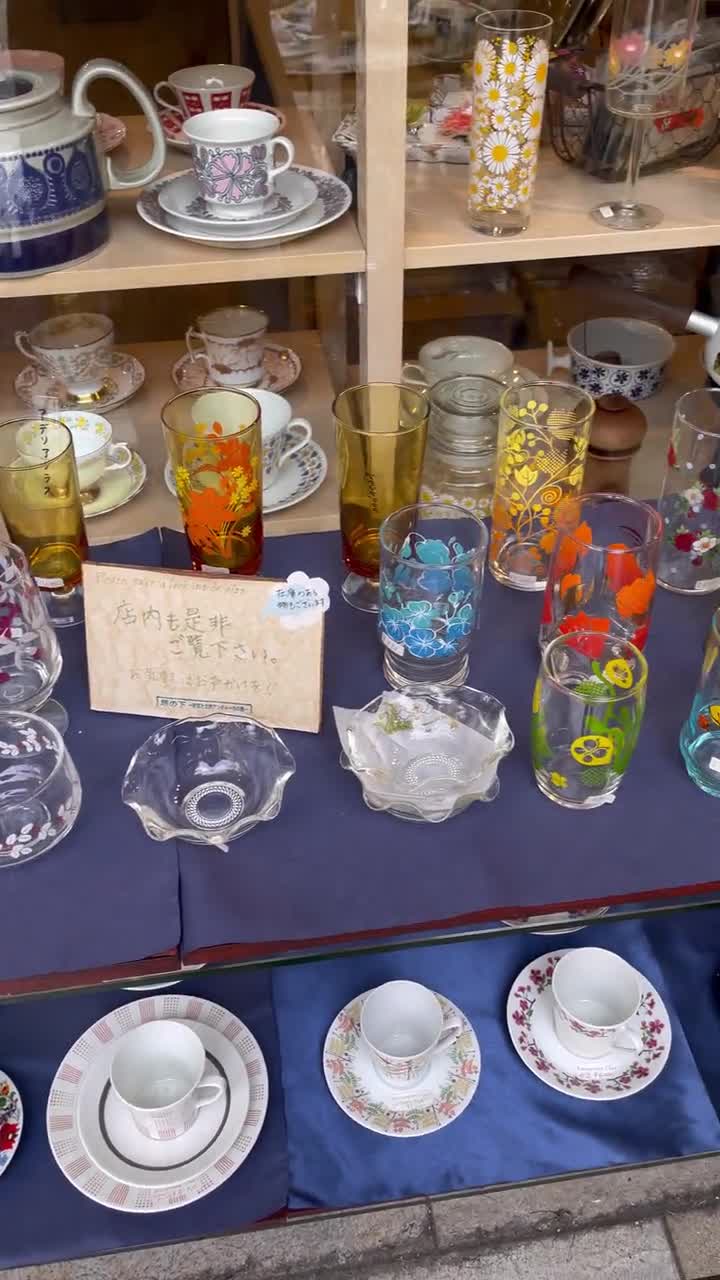
The video opens with a close-up of a display window featuring an array of intricately designed teacups, teapots, and glassware arranged on shelves and a table, highlighting their vibrant colors and craftsmanship. The camera then shifts to a second scene showing a table set with plates, bowls, and a glass jar, positioned against a backdrop of a wooden fence and lush greenery, evoking a cozy, inviting atmosphere. At 4 seconds, a voice exclaims '아멘!' (Amen!), suggesting a moment of appreciation or ritualistic emphasis, possibly in a cultural or spiritual context. The entire sequence is static and visually focused, with no discernible human presence, narrative progression, or clear indication of a specific venue, event, or actionable experience for viewers. The content appears to be a curated showcase of decorative and dining-related objects, likely from a boutique or artisanal shop, but lacks contextual cues such as signage, location markers, or visitor interaction to confirm its real-world discoverability.
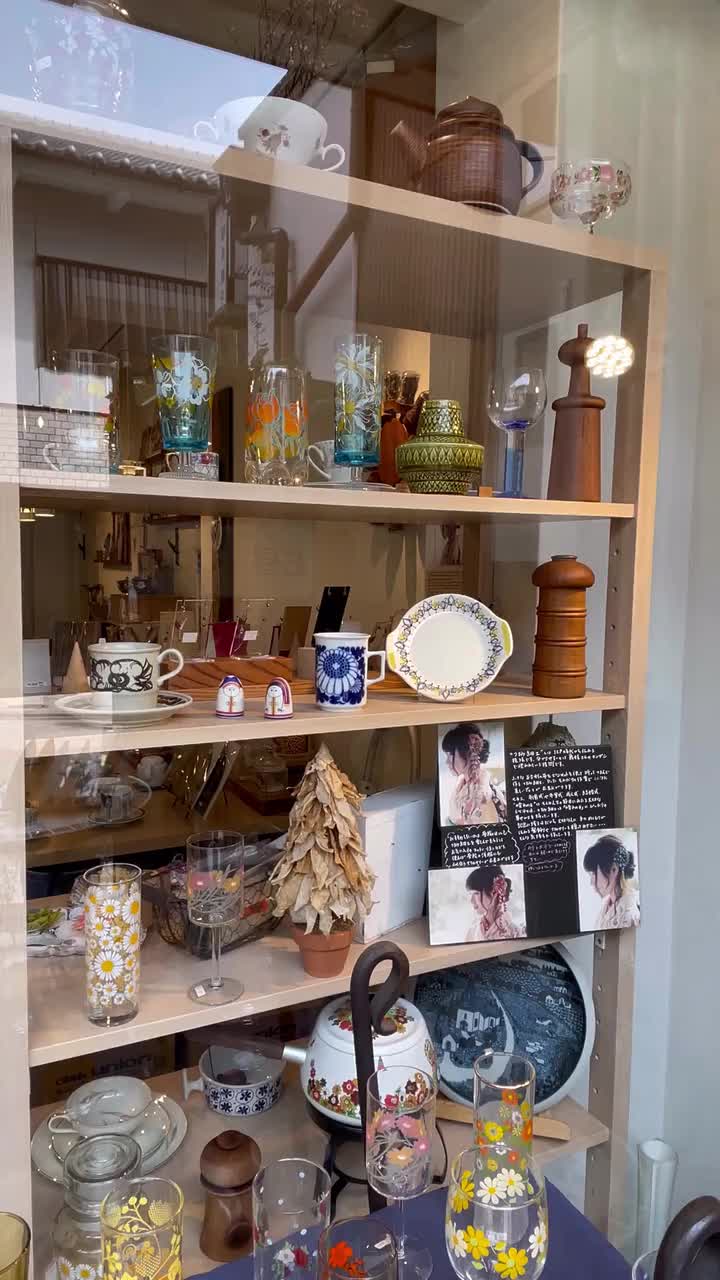
The video is a brief, silent showcase of a shop window display featuring a curated collection of vintage and antique items. At 0:00–0:03, the camera focuses on shelves filled with white and red-patterned teapots, cups, and saucers, arranged with meticulous care. The shot then transitions at 0:03–0:06 to a different section of the display, highlighting colorful glassware, a wooden pepper mill, a small decorative Christmas tree, and framed vintage photographs. The entire clip ends with a simple on-screen message at 0:00–0:07: 'ご視聴ありがとうございました' (Thank you for watching). The video lacks any human presence, narrative, or contextual cues, and appears to be a static, unedited presentation of objects in a retail setting.
The video captures a dynamic street scene in Japan, beginning with a wide-angle shot of a bustling urban street lined with traditional and modern buildings. A couple walks away from the camera, moving toward a prominent pagoda visible in the distance. The camera follows them smoothly, revealing a lively atmosphere with pedestrians, cyclists, and occasional vehicles. The setting suggests a cultural or historical district, possibly in a city like Kyoto or Nara, where such architecture is common. The scene conveys a sense of movement and exploration, emphasizing the experience of walking through a vibrant, authentic Japanese neighborhood. The audio begins with a single word, 'you,' spoken softly at the start, possibly indicating a voiceover or interactive element, though it is brief and unelaborated. The visual content is rich in cultural detail, with signage, architectural elements, and human activity contributing to a strong sense of place and context.
The video opens with a close-up of a display window featuring an array of intricately designed teacups, teapots, and glassware arranged on shelves and a table, highlighting their vibrant colors and craftsmanship. The camera then shifts to a second scene showing a table set with plates, bowls, and a glass jar, positioned against a backdrop of a wooden fence and lush greenery, evoking a cozy, inviting atmosphere. At 4 seconds, a voice exclaims '아멘!' (Amen!), suggesting a moment of appreciation or ritualistic emphasis, possibly in a cultural or spiritual context. The entire sequence is static and visually focused, with no discernible human presence, narrative progression, or clear indication of a specific venue, event, or actionable experience for viewers. The content appears to be a curated showcase of decorative and dining-related objects, likely from a boutique or artisanal shop, but lacks contextual cues such as signage, location markers, or visitor interaction to confirm its real-world discoverability.
The video is a brief, silent showcase of a shop window display featuring a curated collection of vintage and antique items. At 0:00–0:03, the camera focuses on shelves filled with white and red-patterned teapots, cups, and saucers, arranged with meticulous care. The shot then transitions at 0:03–0:06 to a different section of the display, highlighting colorful glassware, a wooden pepper mill, a small decorative Christmas tree, and framed vintage photographs. The entire clip ends with a simple on-screen message at 0:00–0:07: 'ご視聴ありがとうございました' (Thank you for watching). The video lacks any human presence, narrative, or contextual cues, and appears to be a static, unedited presentation of objects in a retail setting.


